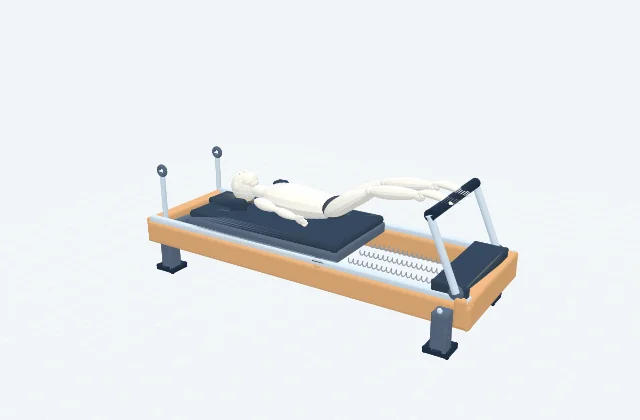
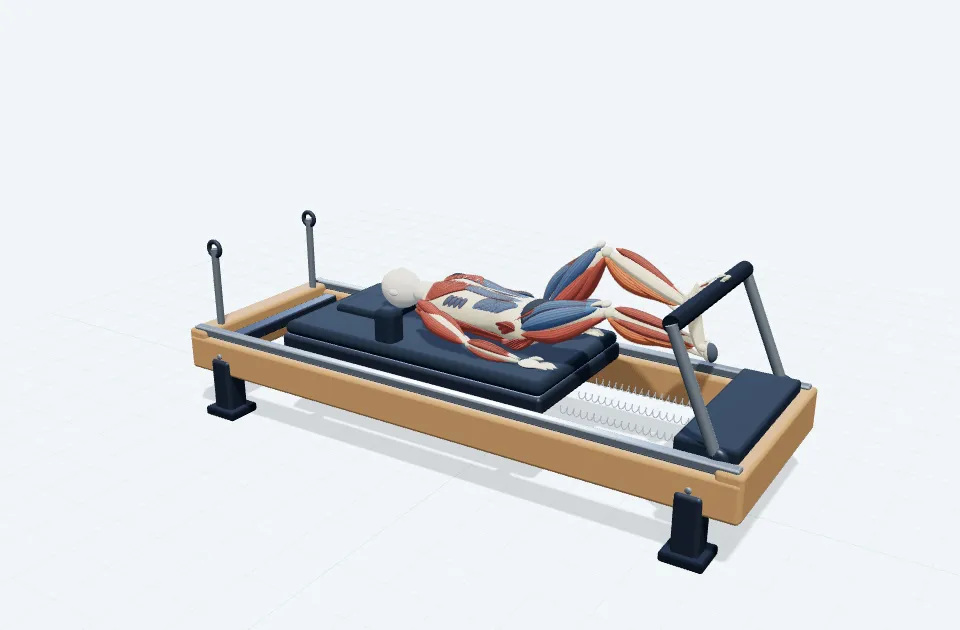
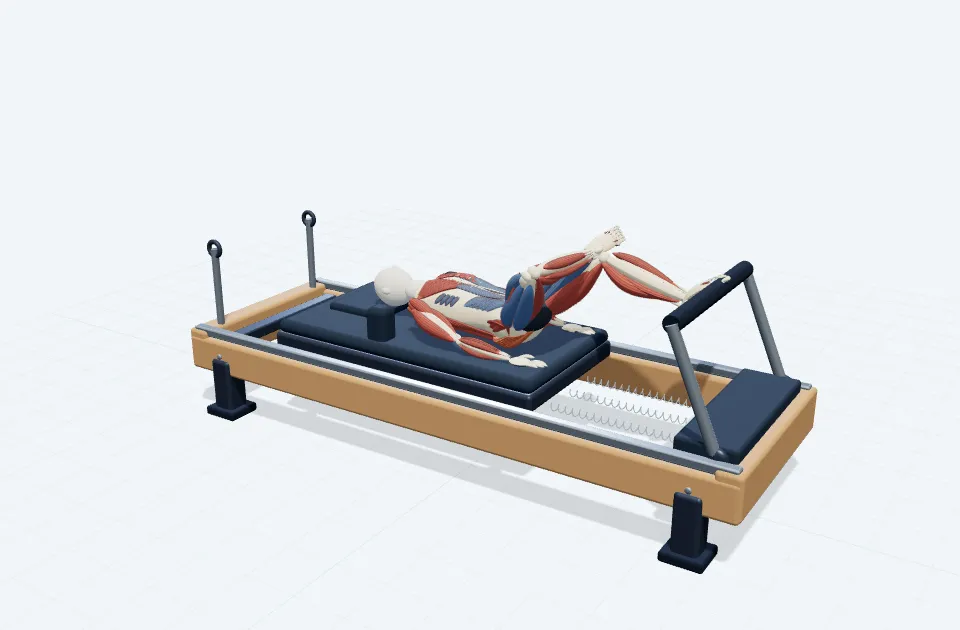
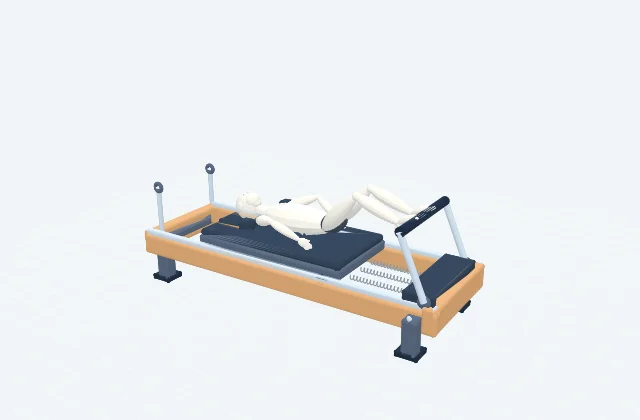
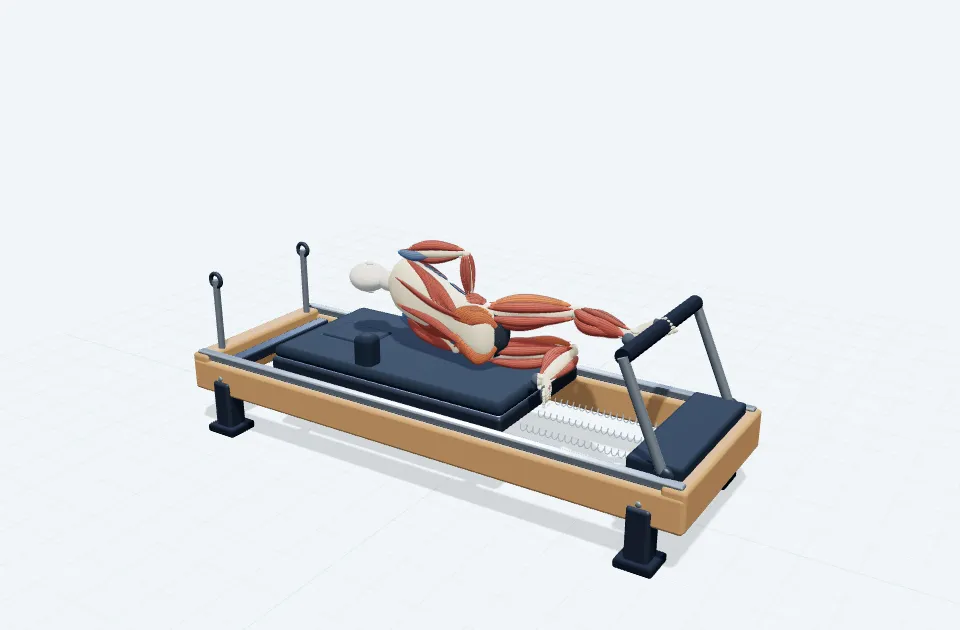
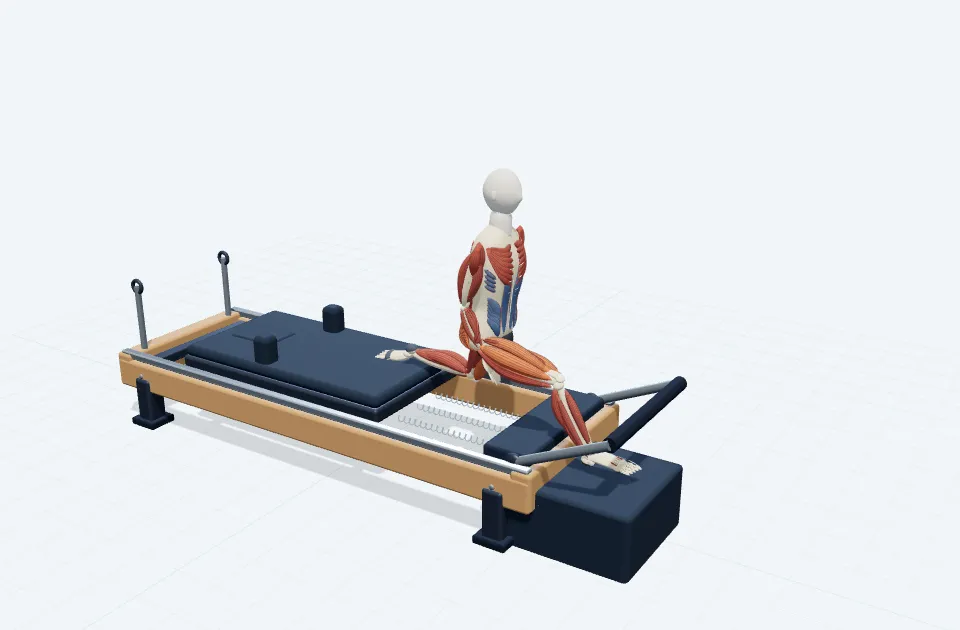
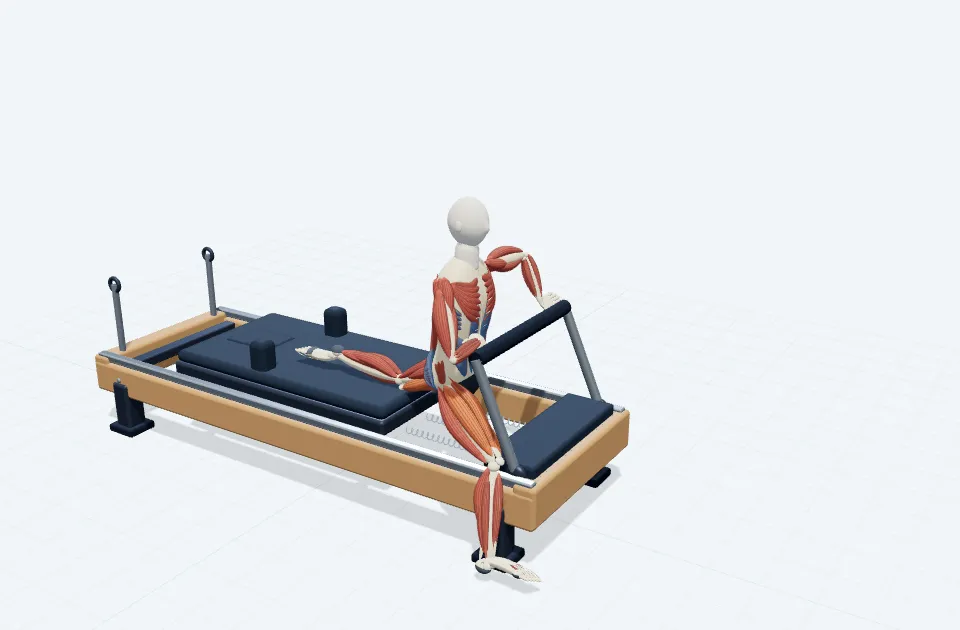
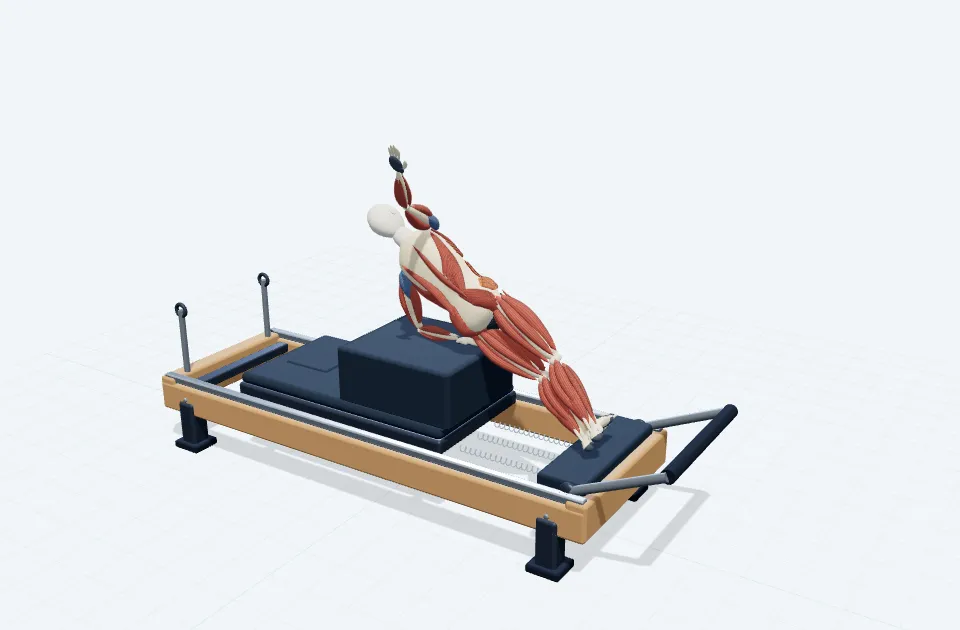
Ankles, knees and hips in line
In footwork, check where the feet meet the bar and whether the knees point the same way as the toes. When the legs are straight, see whether the knees are pushed back into a locked position.
How the reformer works, 51 exercises by starting position, an order to look at them in and what to watch. See in 3D how the body is supported on a carriage that moves.
Free during the previewThe reformer is the most widely used Pilates machine. A padded platform, the carriage, rolls back and forth on rails and is attached to the frame by springs. Pushing a bar with the feet or pulling a strap with the hands moves the carriage away; on the way back, the body controls the pull of the springs as they draw it home.
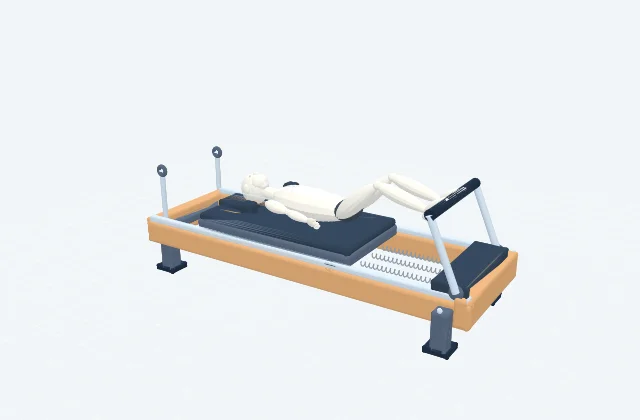
Some exercises add accessories, such as a box placed on the carriage (the long box or short box) or a jump board to push off with the feet. The 3D lessons show these exercises with their starting positions too.
Mat Pilates is done on the floor, mostly with body weight and gravity. The reformer adds the resistance of the springs and a moving carriage. The direction of each push and pull becomes clearer, but because the carriage moves, it matters to notice where the body is being supported.
Neither is simply easier or harder. Equipment, support and ways of learning are compared on What is Pilates? Reformer and mat compared. Floor exercises are in the mat Pilates library.
Grouped by starting position. Each picture is one moment from the 3D lesson. Open a card for the movement notes, or choose Watch in 3D to pause and turn the model. This is a list by position, not a workout to follow in order.
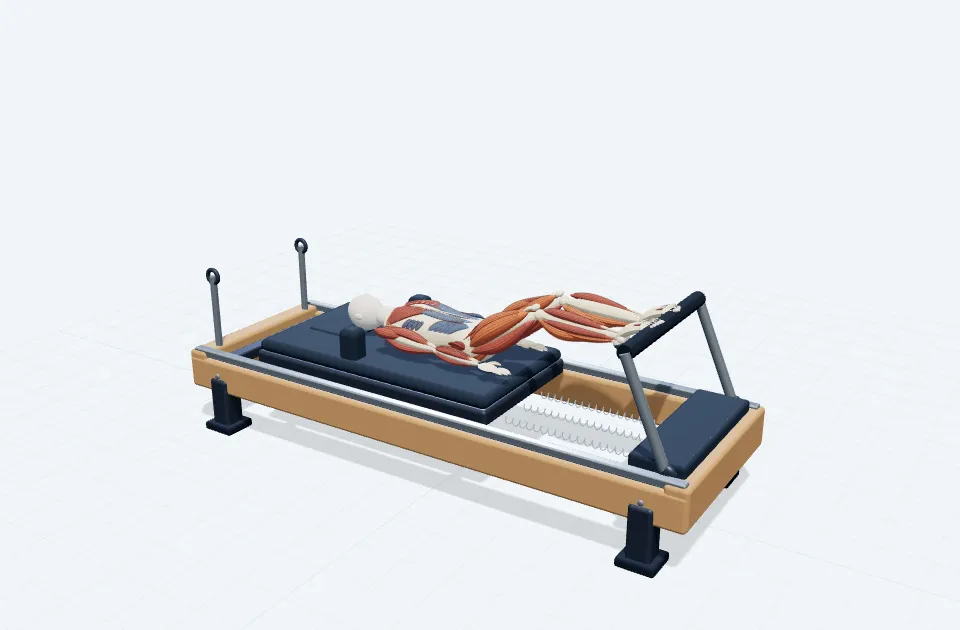
Lying on the back is usually the first position taught on the reformer. With the whole back supported by the carriage, it is easier to tell the movement of the arms and legs apart from the position of the trunk.
The feet rest on the bar and the legs bend and straighten to move the carriage. Watch how the ankles, knees and hips line up, and how the carriage is controlled on the way back in. Most reformer classes begin here.
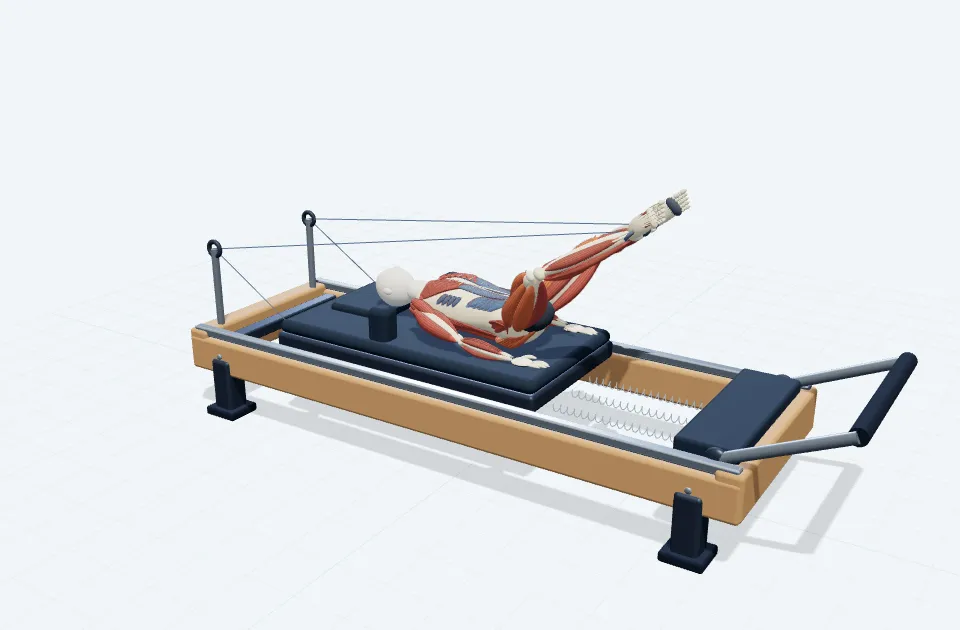
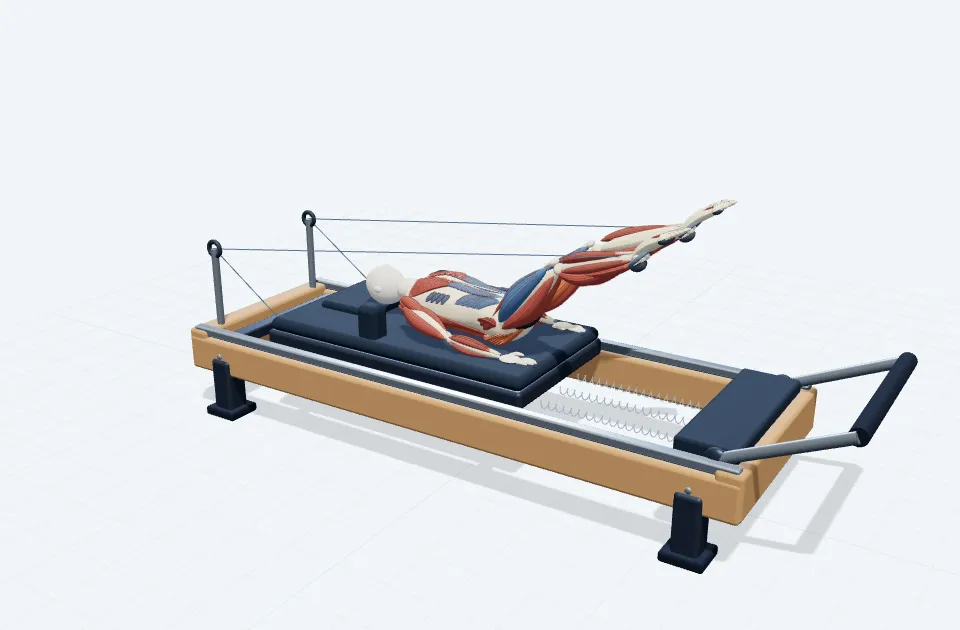
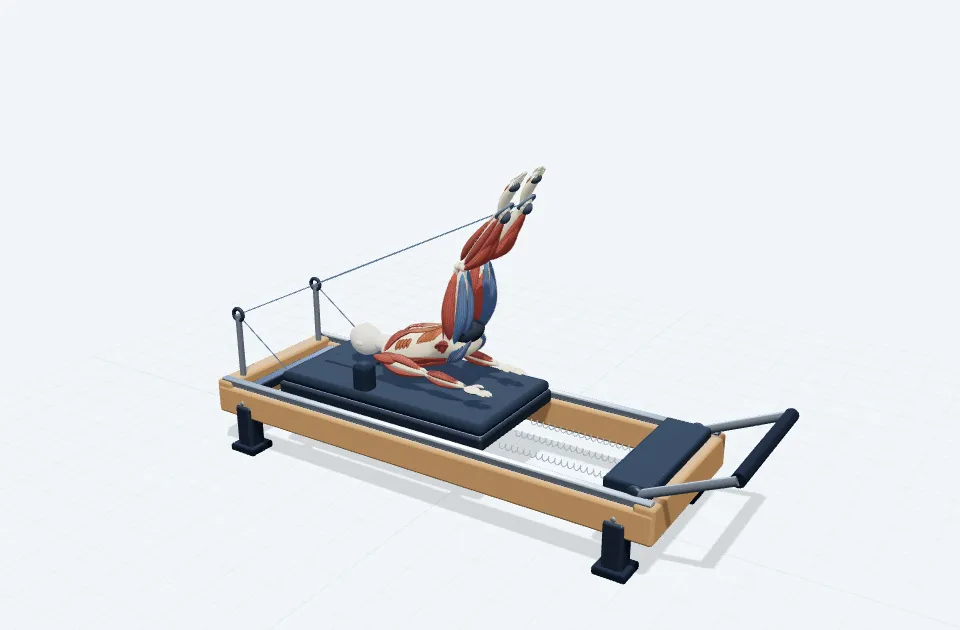
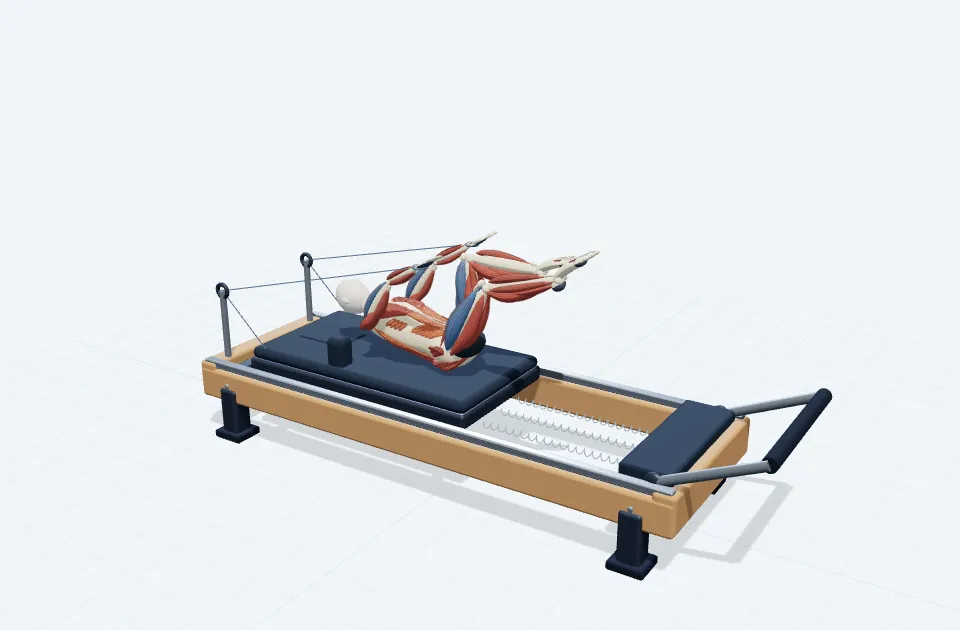
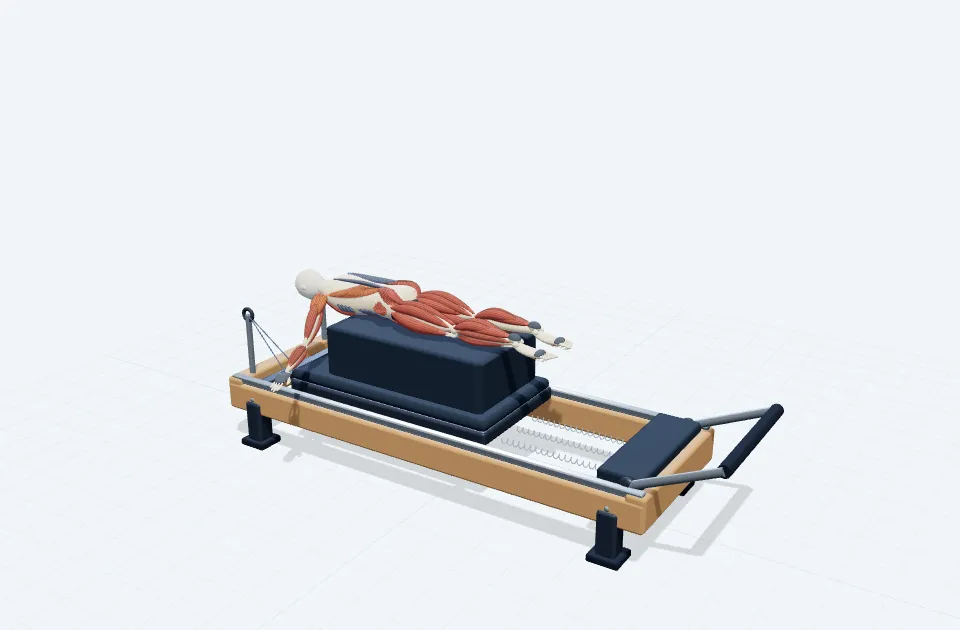
The straps stay taut around the feet while the legs move through the air. With nothing under the feet, the main thing to watch is whether the pelvis and back keep their contact with the carriage.
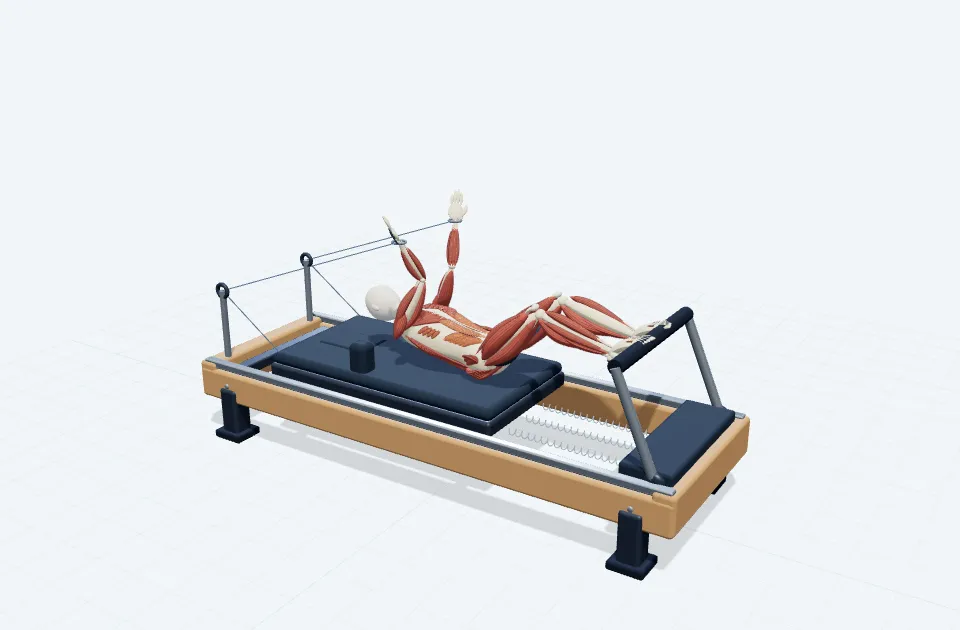
Lying on the back, the arms pull the straps down beside the body or draw circles. Watch whether the shoulders and ribs stay where they are while the arms move.
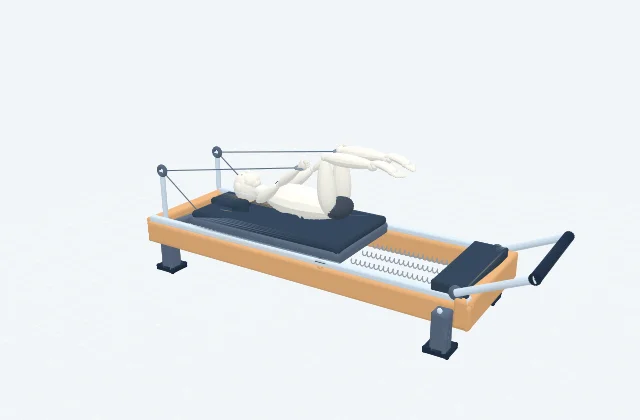
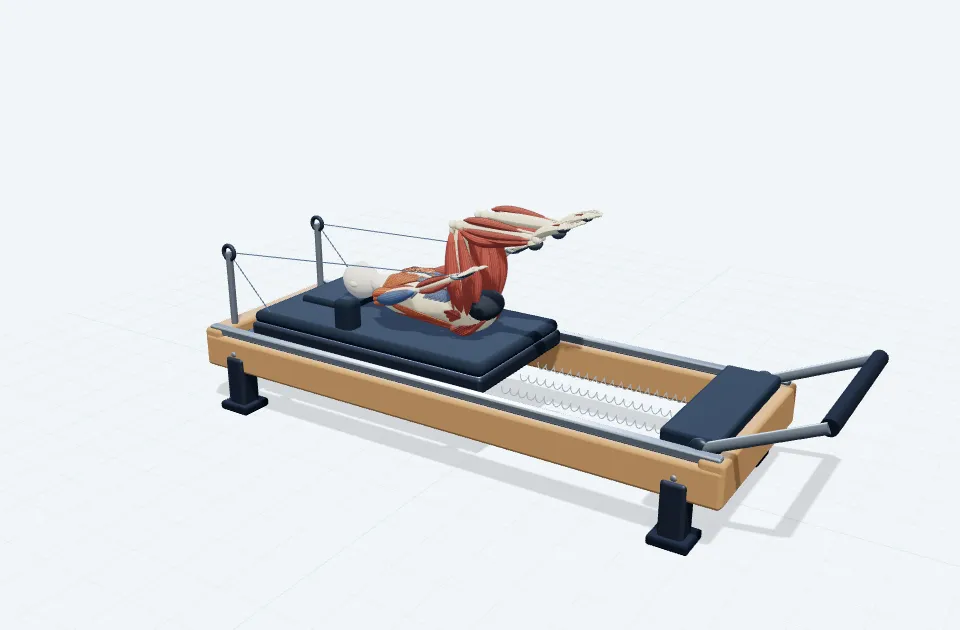
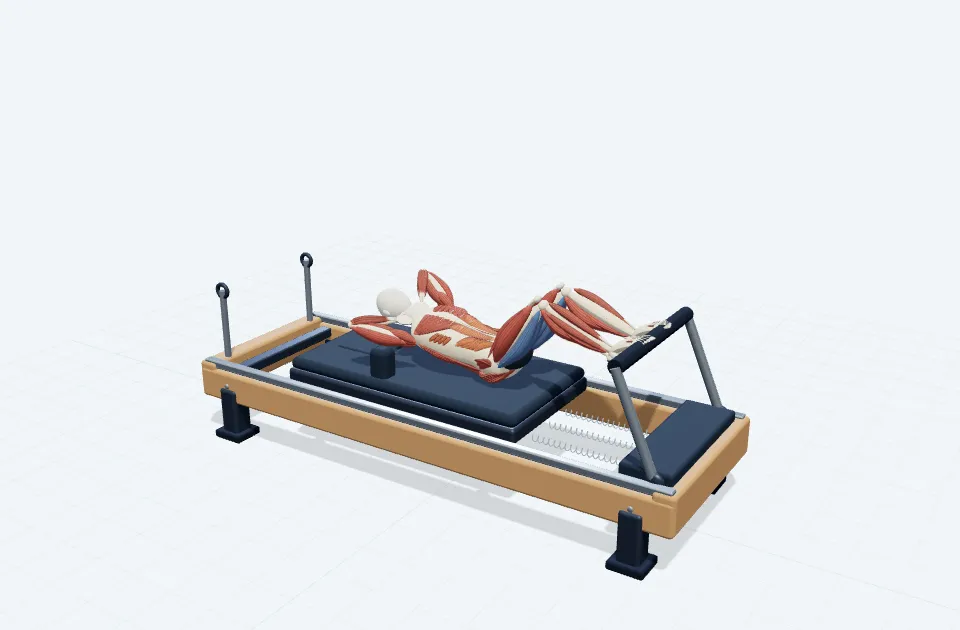
From a small tilt of the pelvis to lifting the hips and curling the upper body. Watch the spine move one section after another rather than bending in one place.
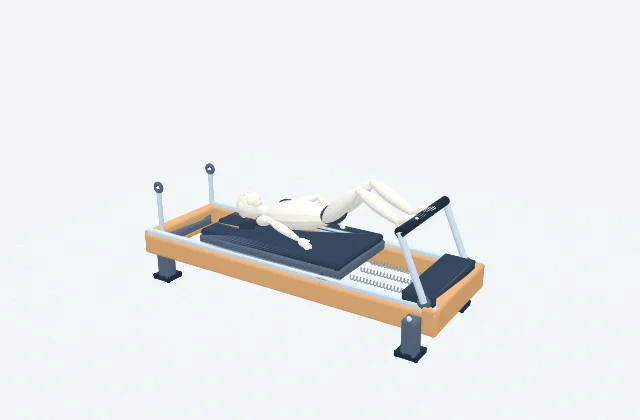
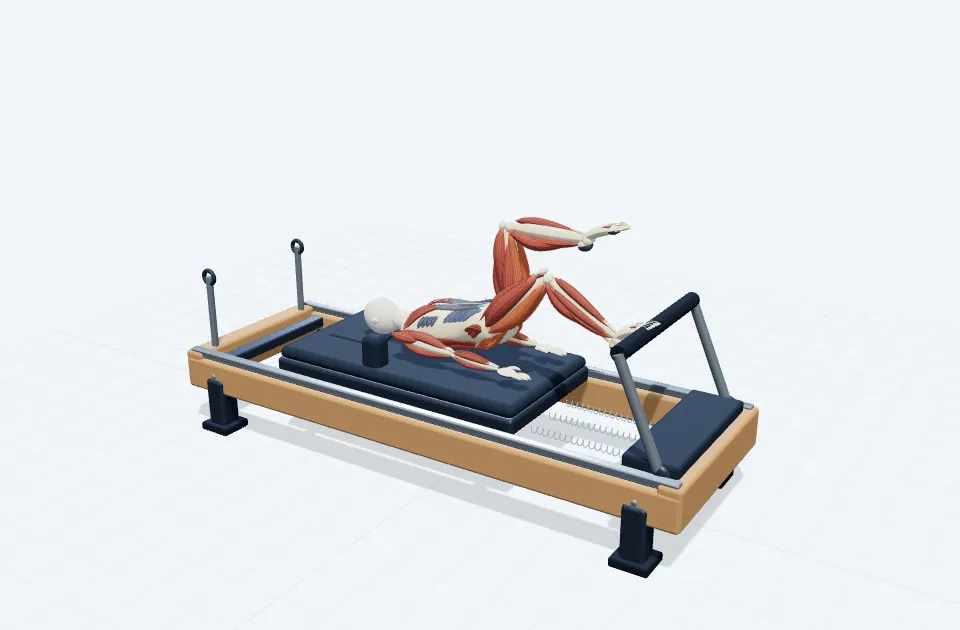
Tilt the pelvis backwards and lift the hips a little from the carriage.
Watch in 3D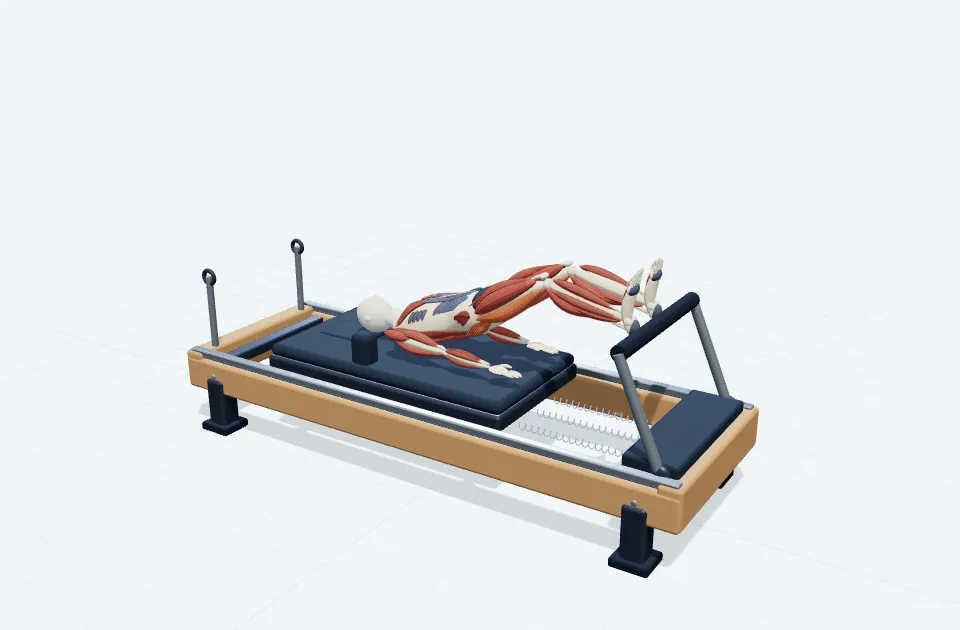
Extend the knees to move the carriage away while maintaining pelvic height.
Watch in 3DThis exercise uses a jump board fitted to the end of the reformer. Pushing off, leaving the board and landing change the points of contact a great deal, so it is shown here as an exercise to learn with an instructor.
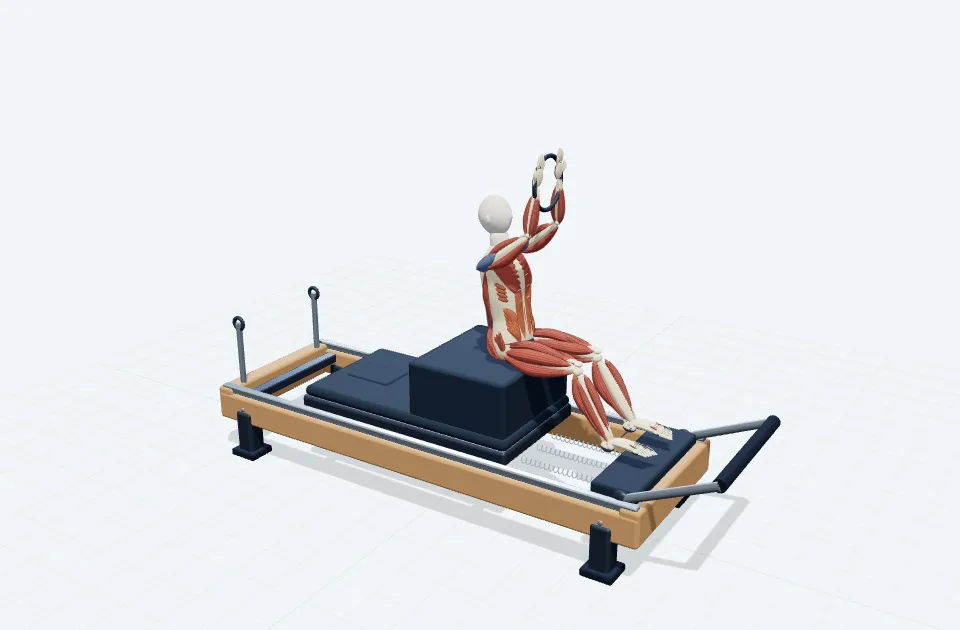
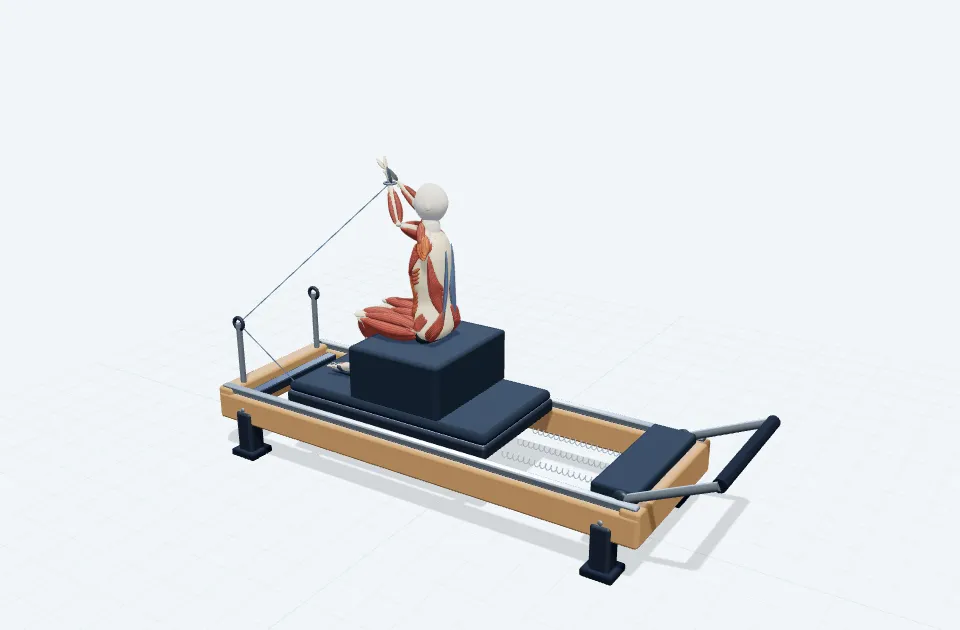
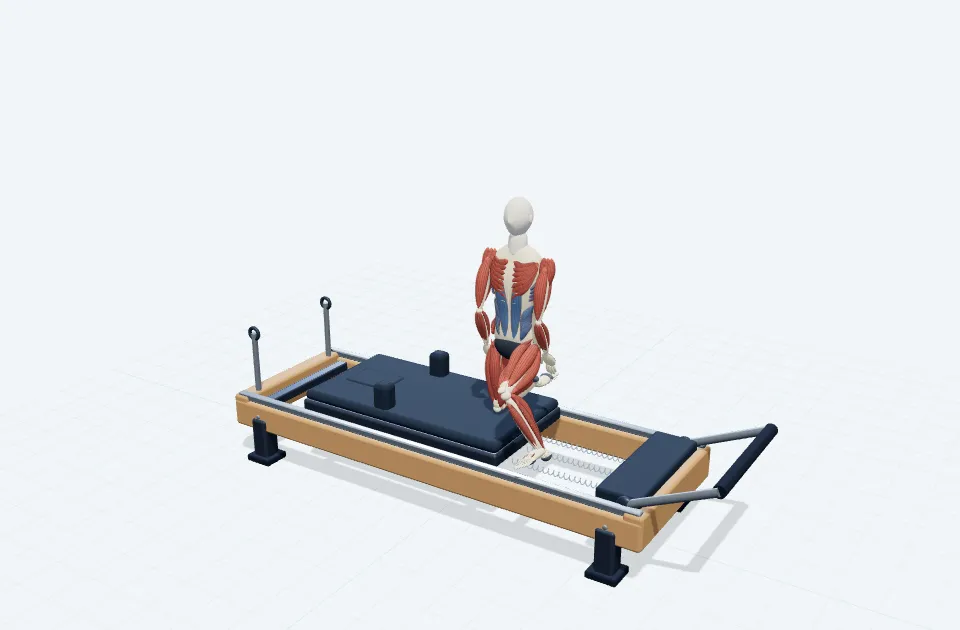
Sitting on the carriage or a box, supported through the sitting bones, the spine rounds, tilts and turns.
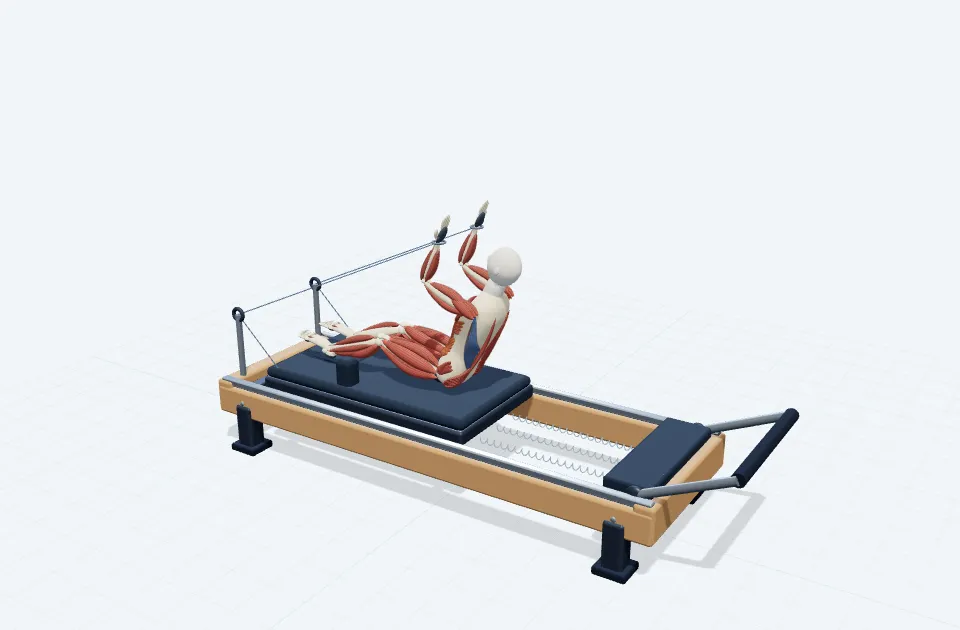
Tilt the pelvis backwards and round the back as the upper body rolls towards the rear.
Watch in 3D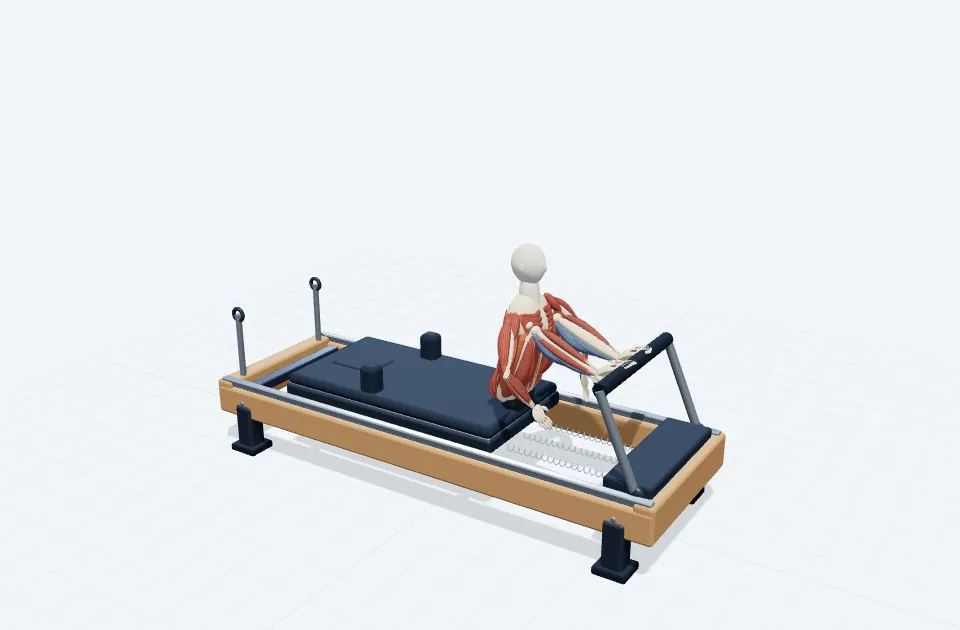
Maintain the rounded back as the legs extend, with a small change at the ankles.
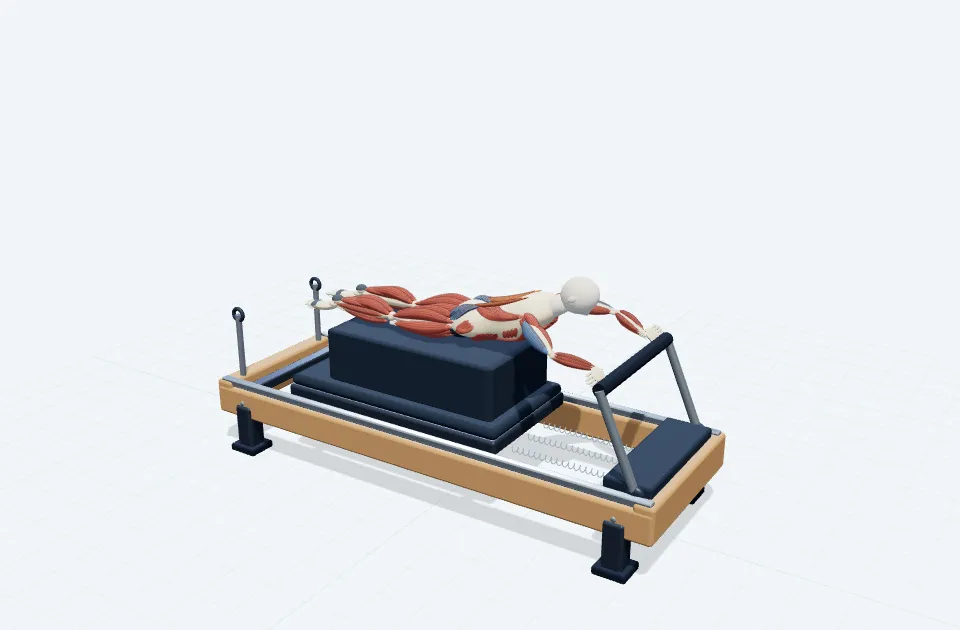
Watch in 3DLying face down on the long box, the chest lifts or the arms pull the straps.
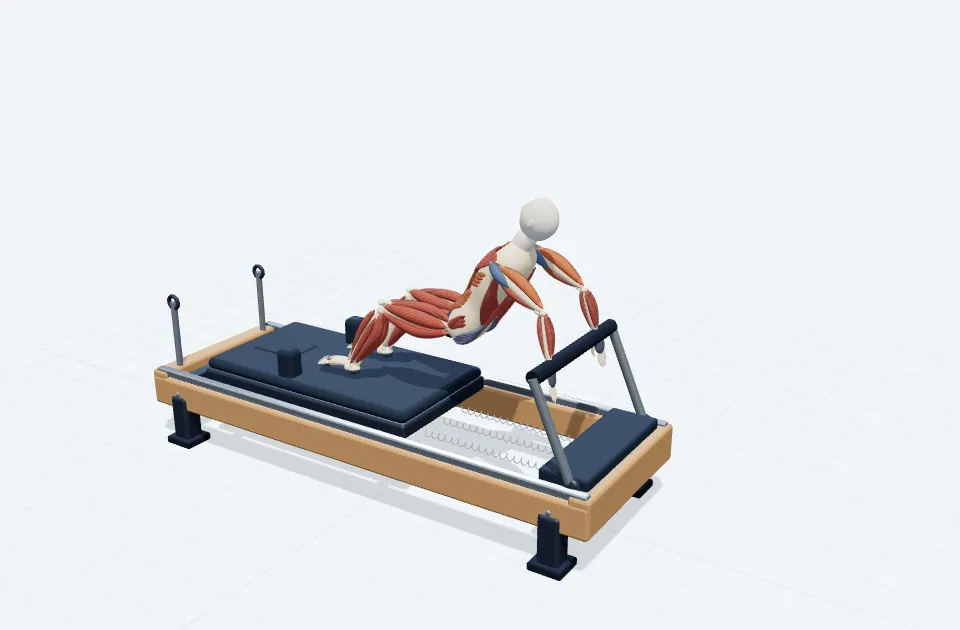
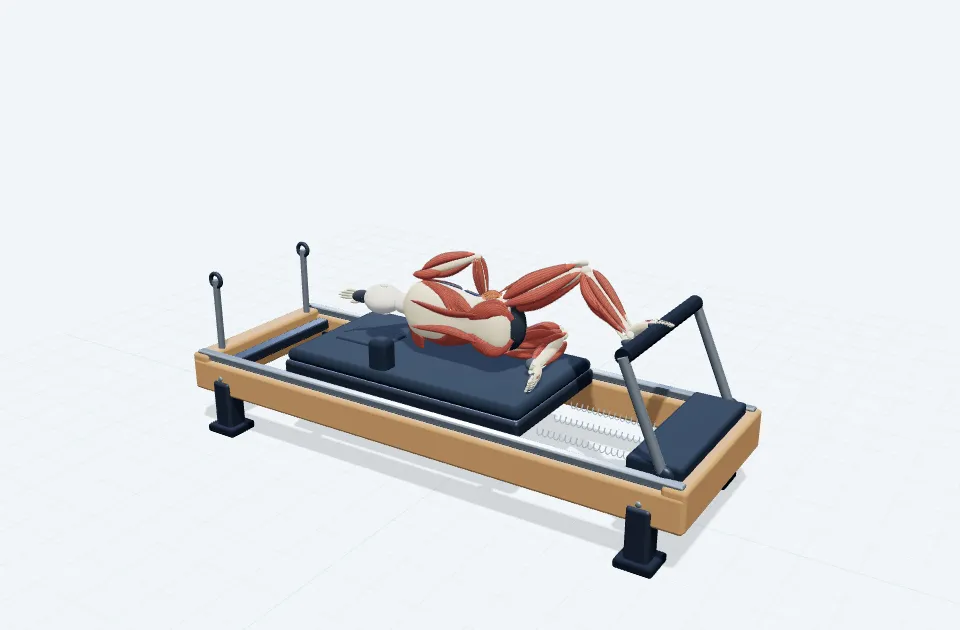
Lying on one side, the pelvis keeps facing forwards while the top leg opens or presses.
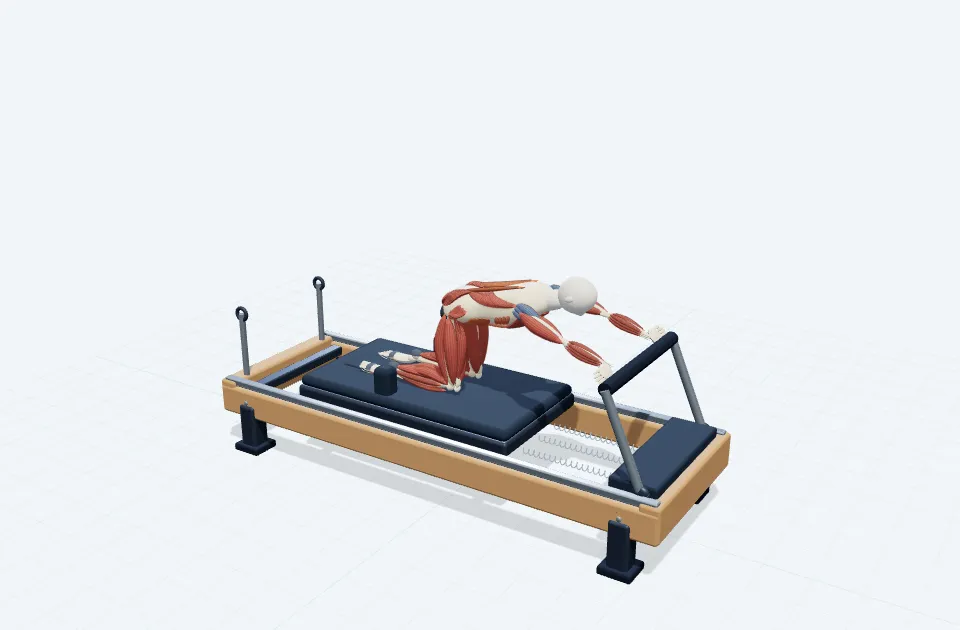
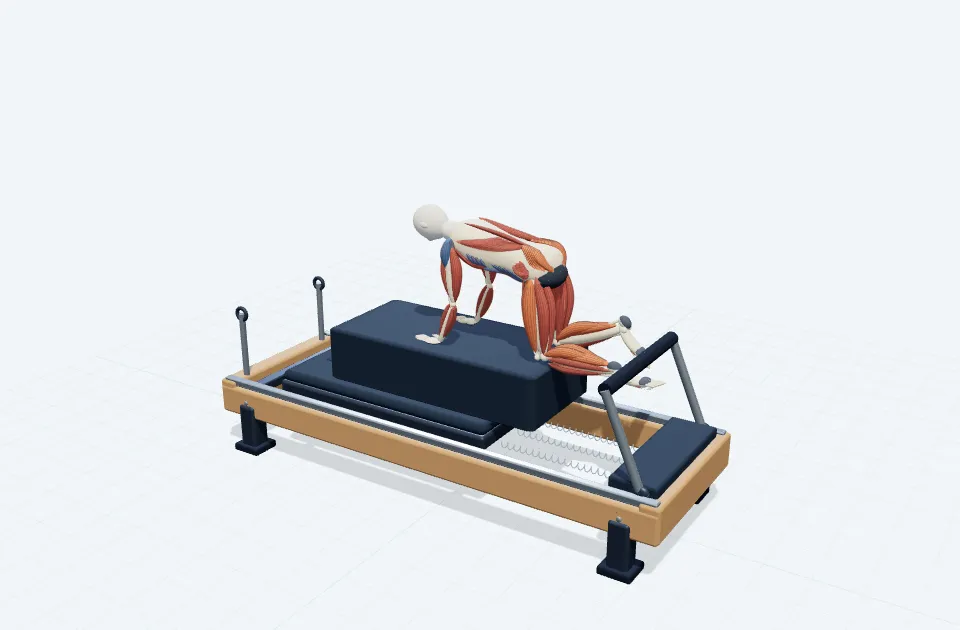
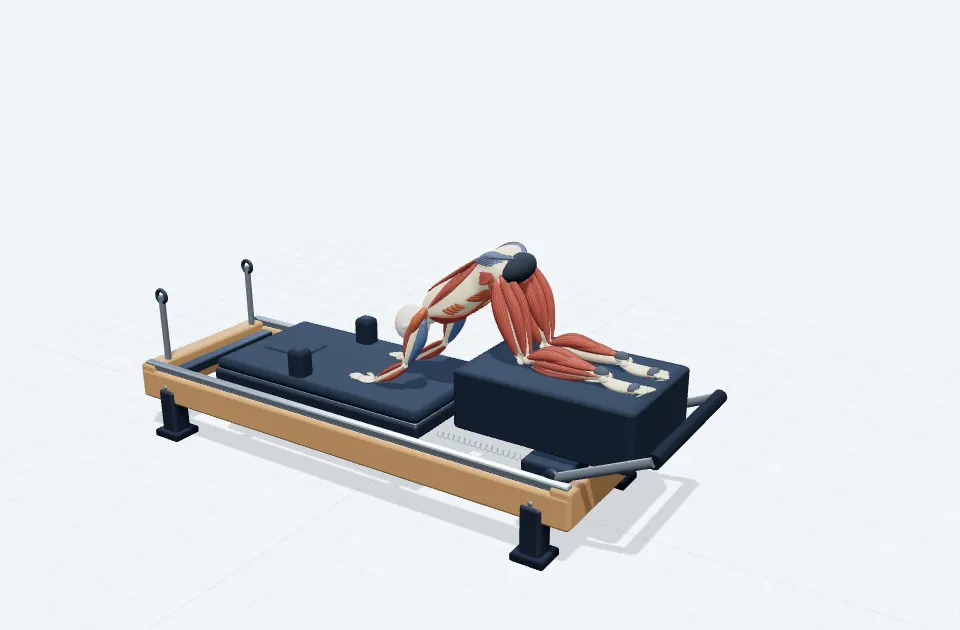
Supported on the hands and knees, the back rounds and lengthens and the shoulders move as the carriage travels.
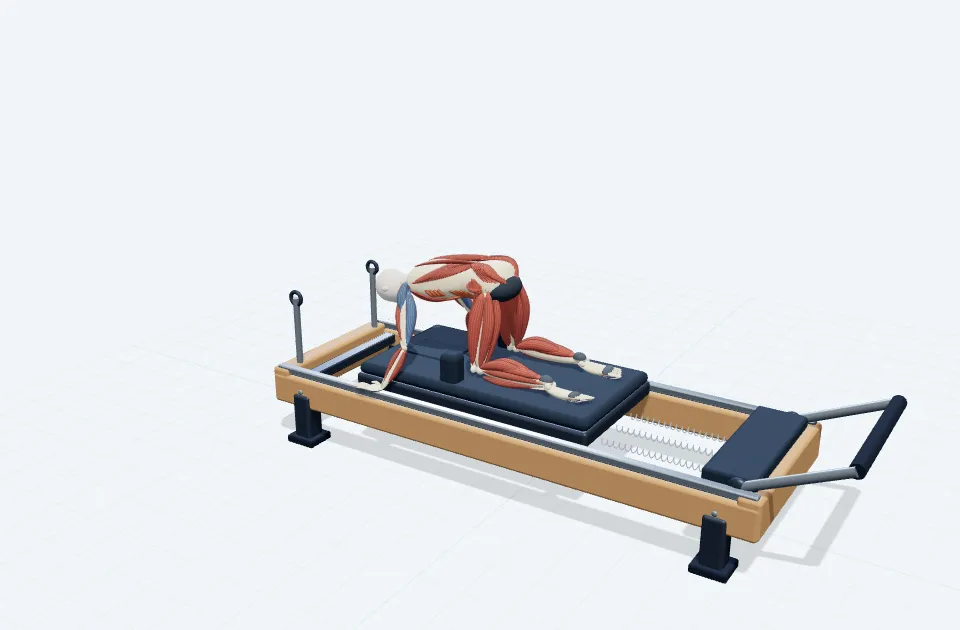
Tilt the pelvis backwards, round the back and draw the knees towards the hands.
Watch in 3D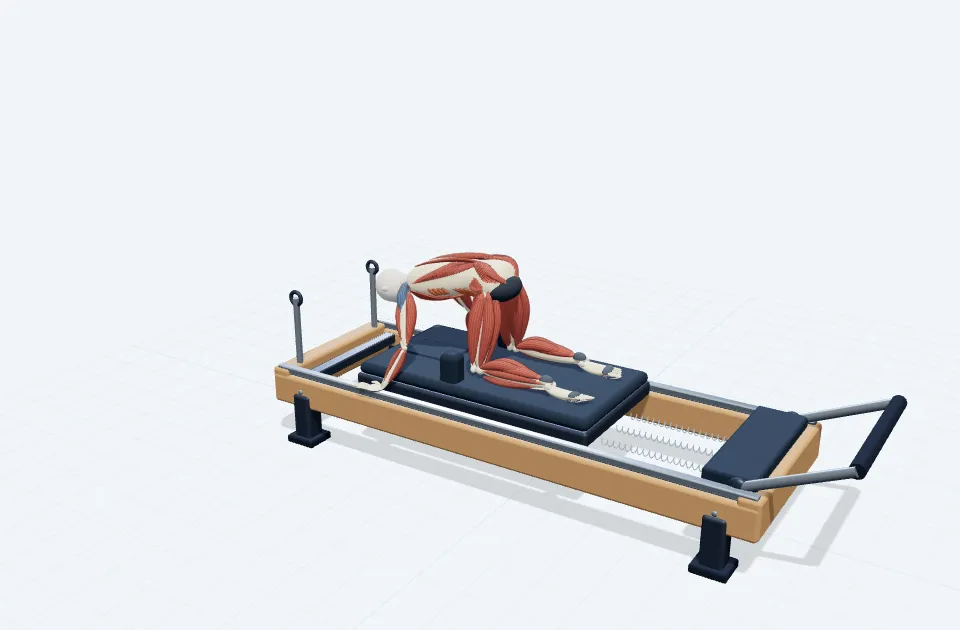
Bring the shoulder and pelvis on the selected side closer together while rounding the back.
Watch in 3D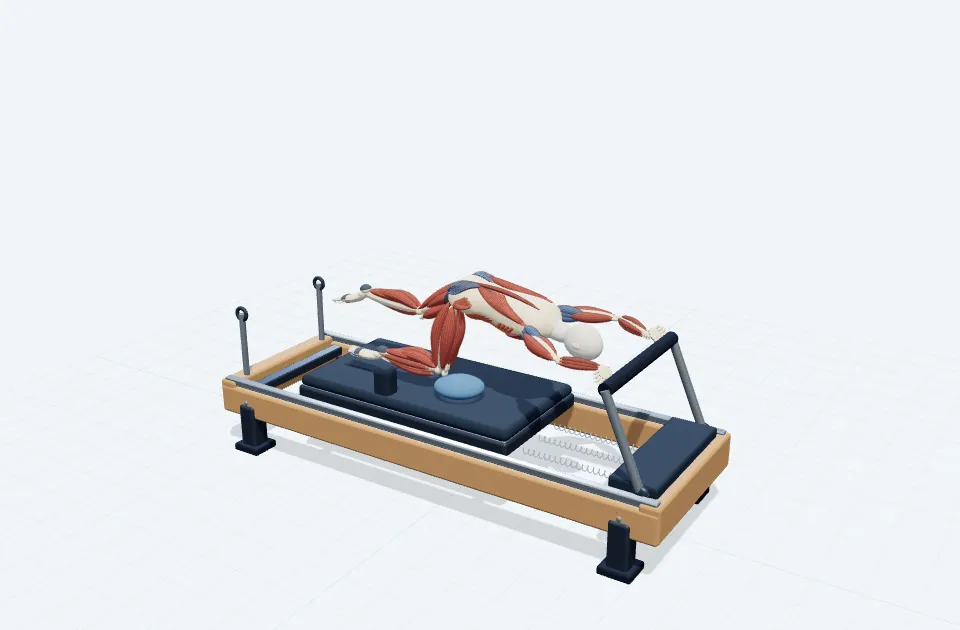
Send the opposite leg backwards while bringing the rib cage and pelvis closer together.
Watch in 3D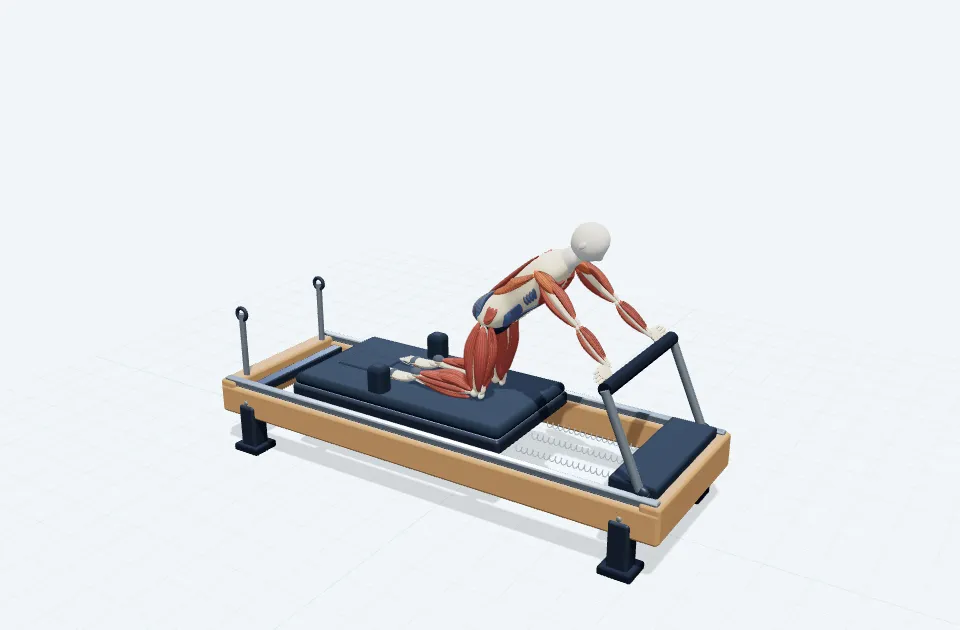
Keep the elbows extended while flexing the shoulders and sending the carriage backwards.
Watch in 3D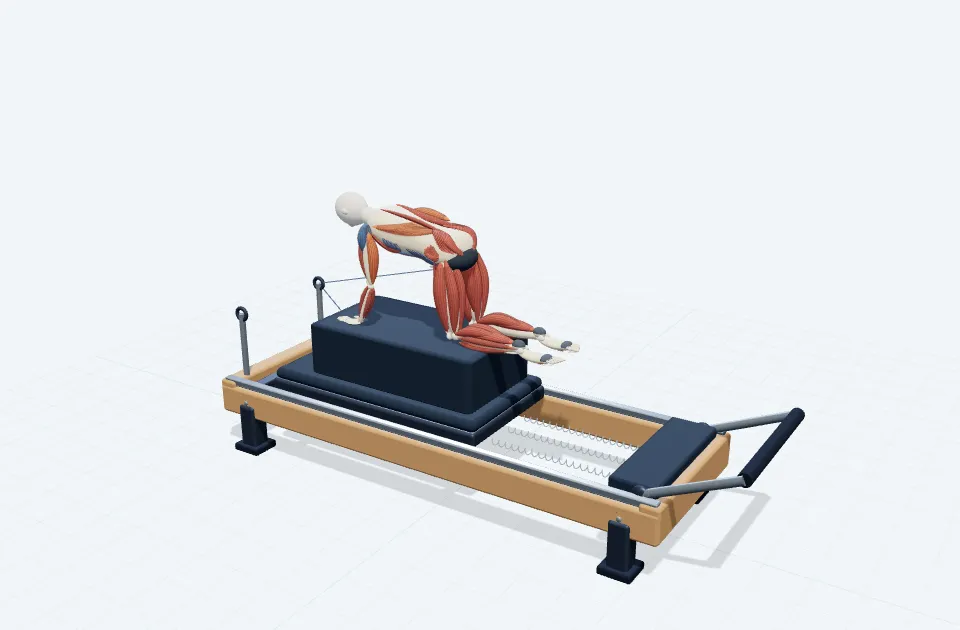
Draw the elbow towards the side, then extend it while maintaining the upper-arm position.
Watch in 3D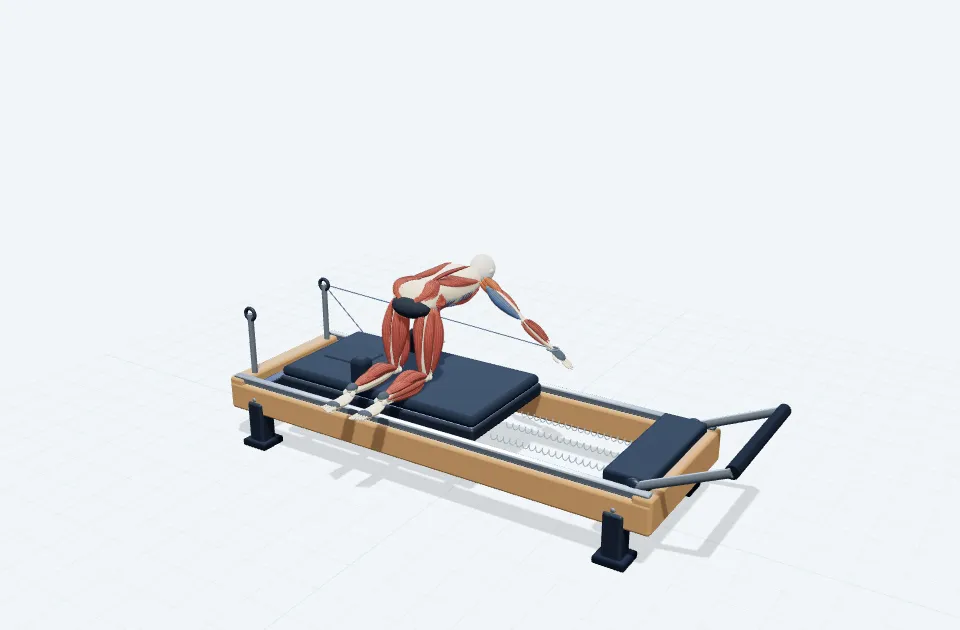
With the elbow long, draw the arm sideways through horizontal shoulder extension.
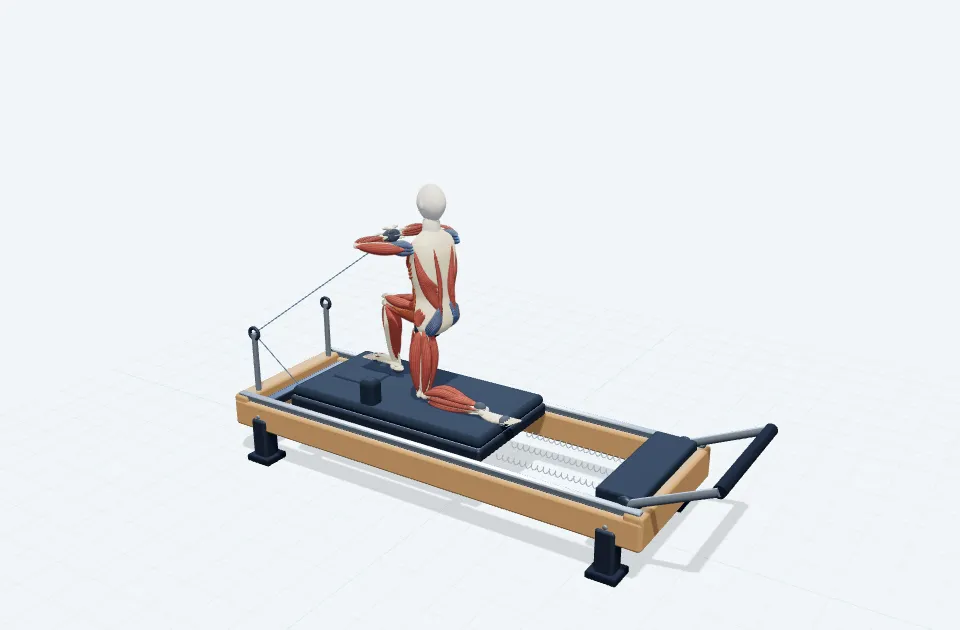
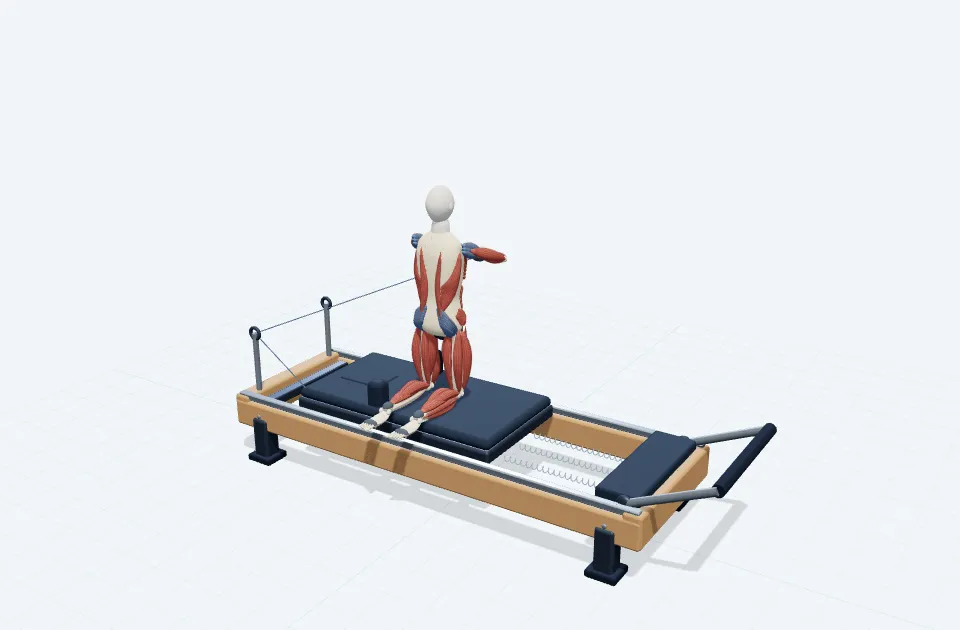
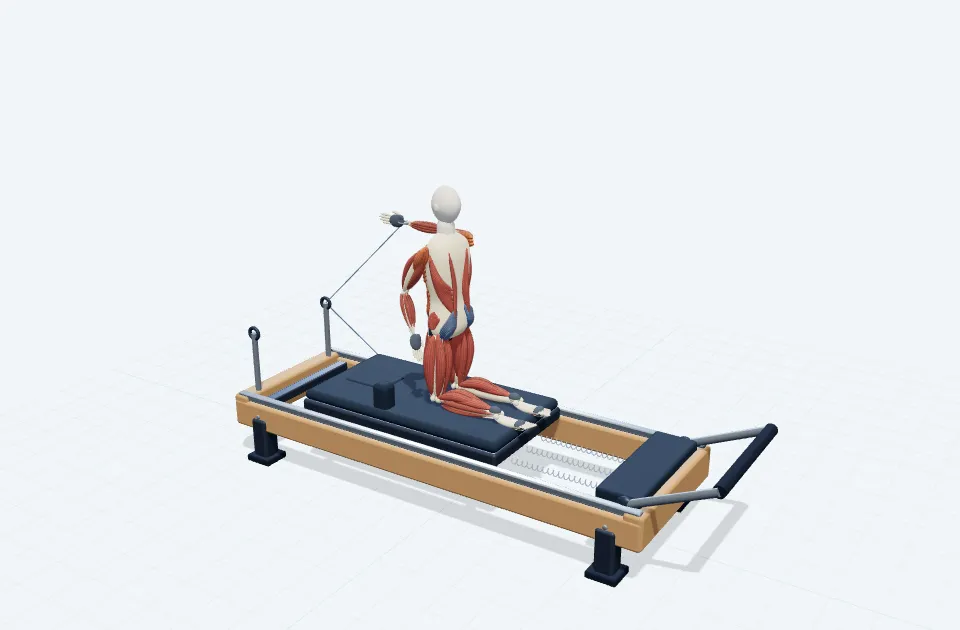
Watch in 3DIn tall kneeling or half kneeling, the trunk holds steady against the pull of the straps, or the rib cage turns.
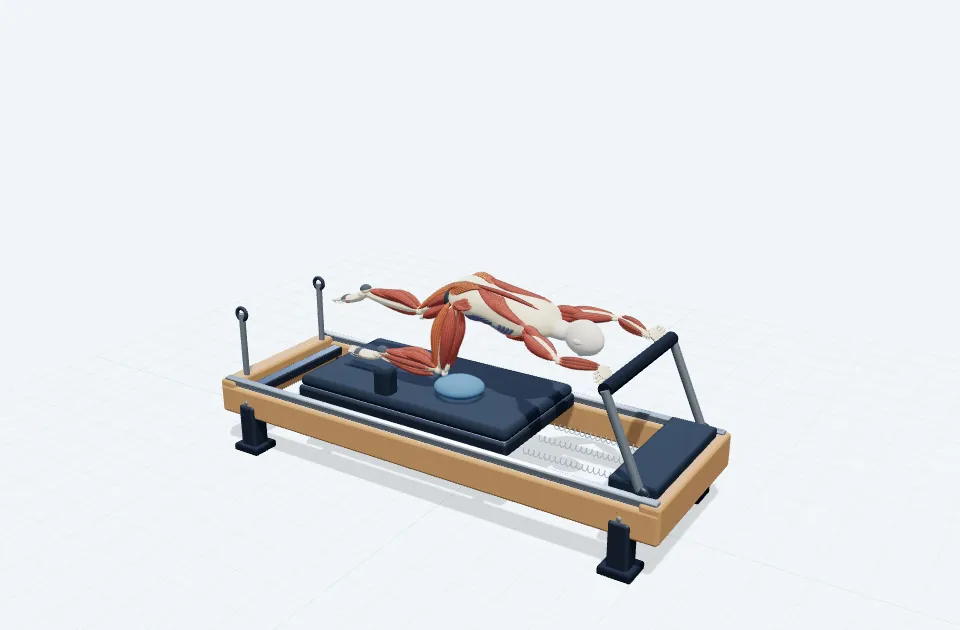
Hinge the trunk forwards at the hip and extend the opposite leg backwards.
Watch in 3D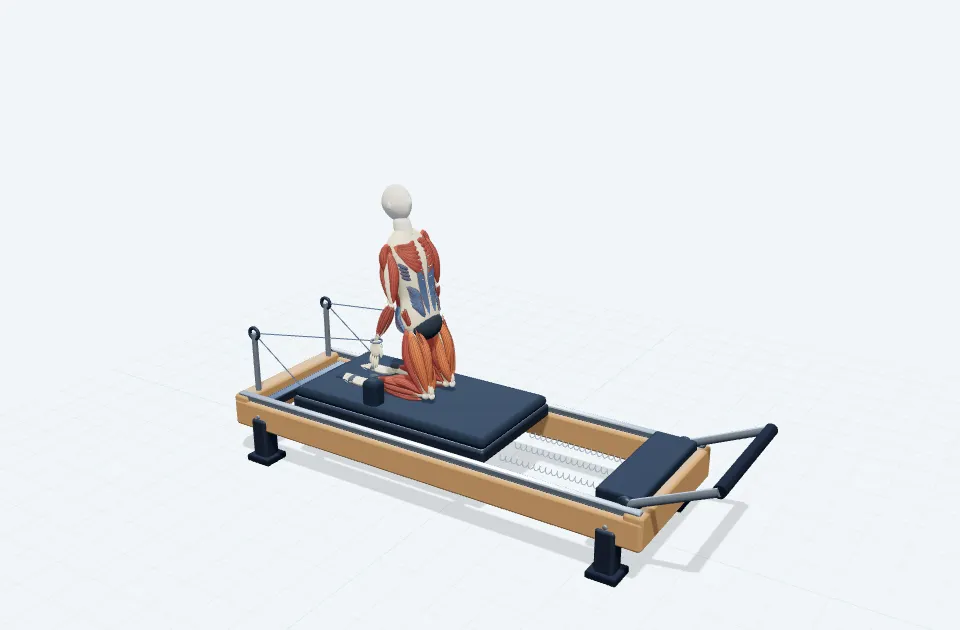
Maintain length from knees to head and lean the whole body backwards, lengthening the front of the thighs.
Watch in 3D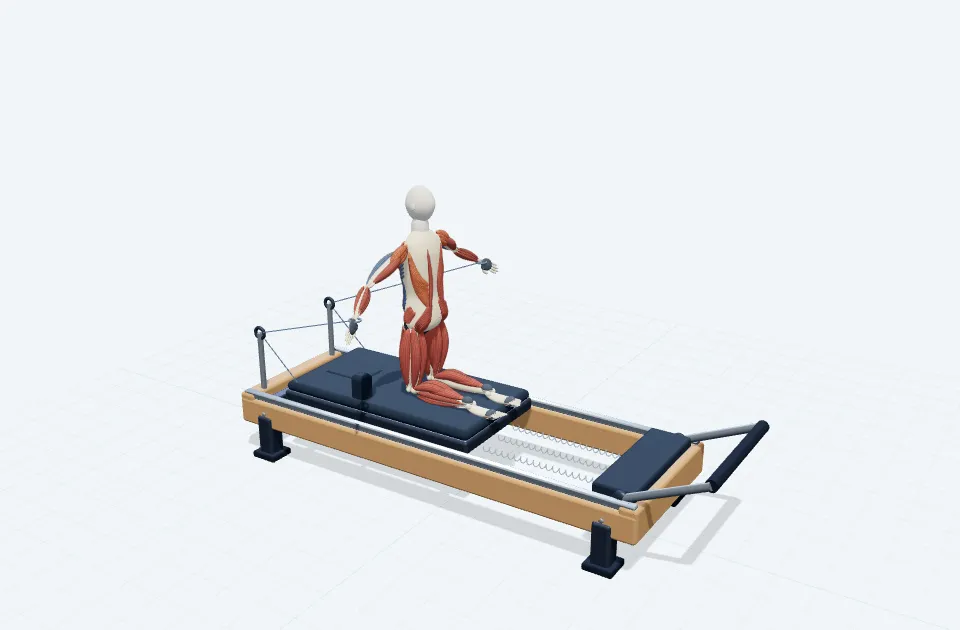
Circle the arms outwards from the sides and lift them in front of the shoulders.
Watch in 3D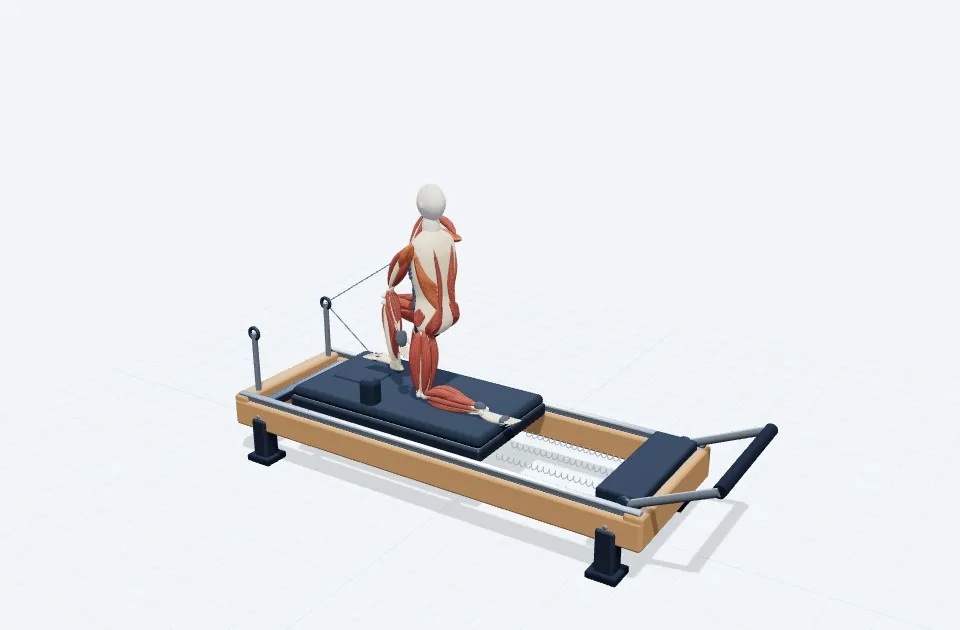
Draw the elbow towards the side while rotating the rib cage in the same direction.
Watch in 3D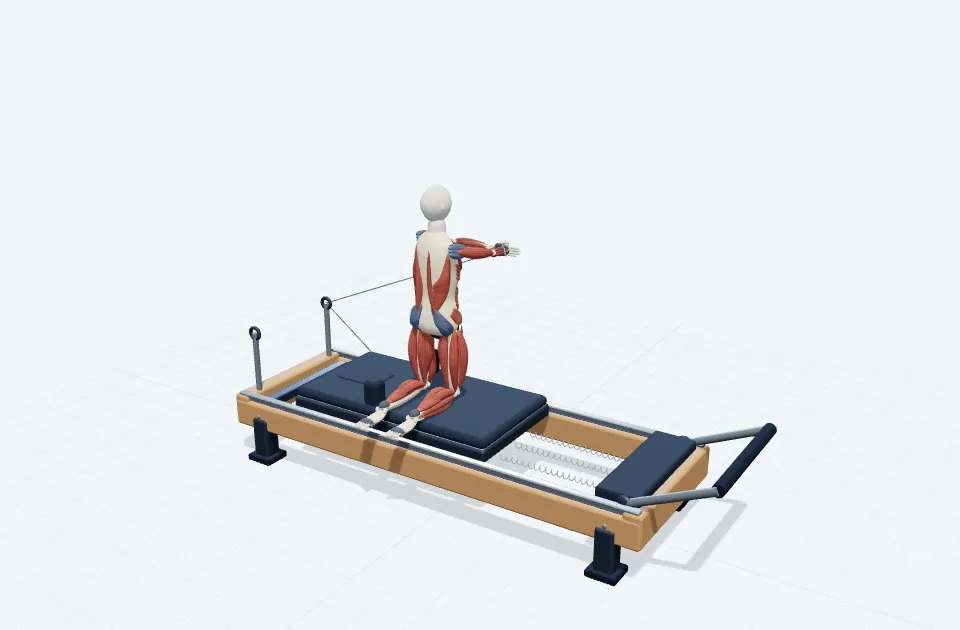
Maintain pelvic orientation while turning the rib cage and hands towards the selected side.
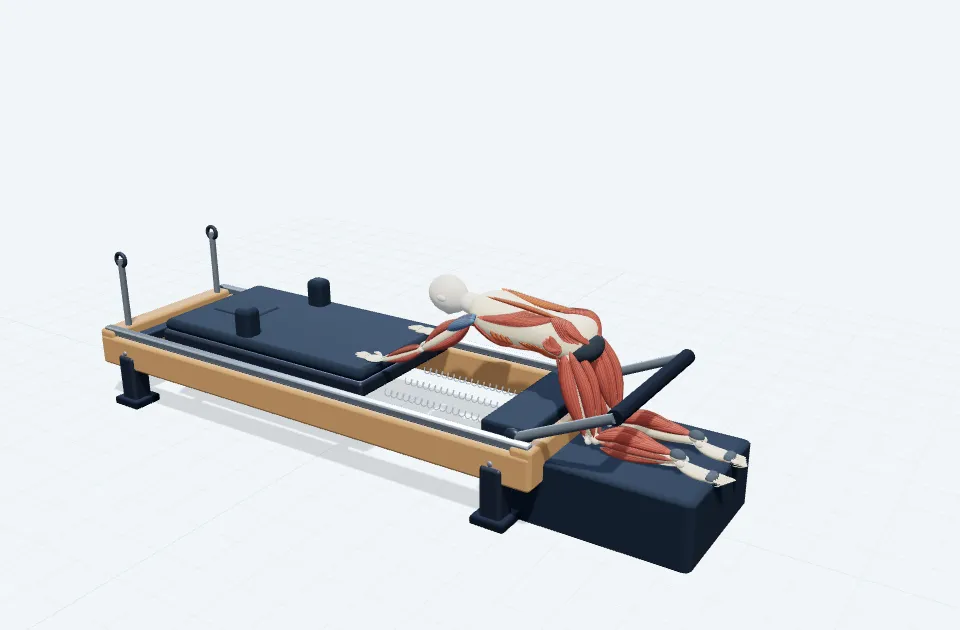
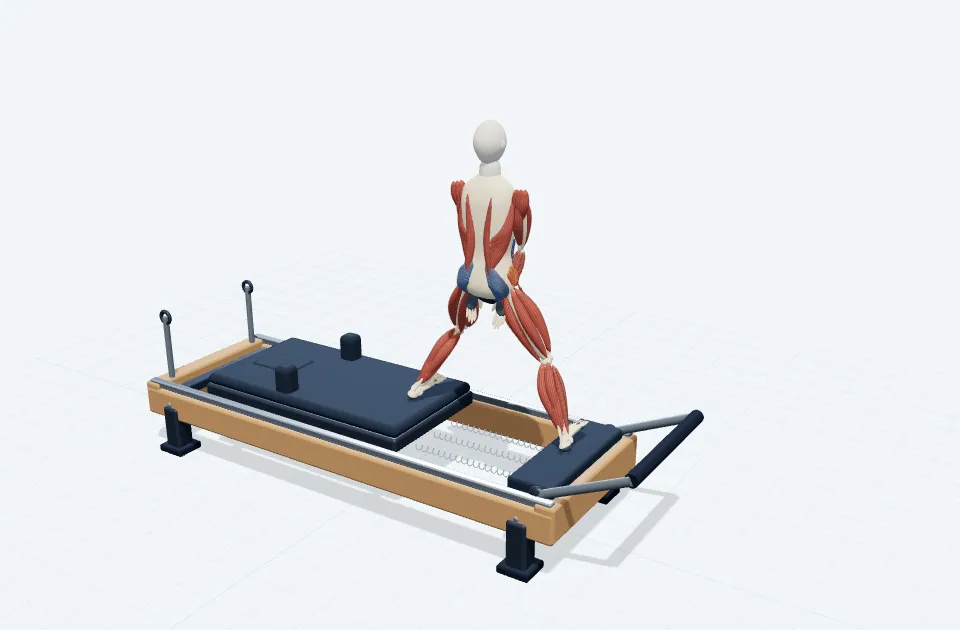
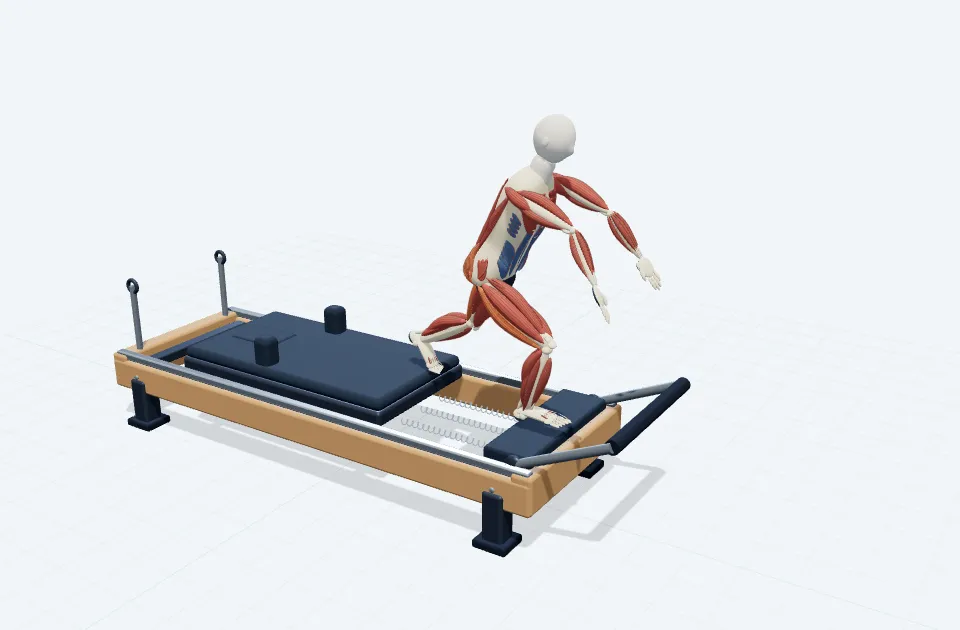
Watch in 3DOne foot on the fixed platform or a box and one on the carriage, the hips open, close or fold. Standing on the machine is an advanced position to learn with an instructor.
The full Pilates library: reformer and mat exercises together
When you first look at the reformer lessons, starting with exercises lying on the back makes it easier to connect the machine with the movement of the body, because the contact with the bar and carriage is easy to see. The order below is one way to observe the lessons in 3D. It is not a class plan and does not set exercises or repetitions.
Where the feet meet the bar, which way the knees and toes point and how far the carriage travels. The way in to how the machine works.
Watch in 3DA small movement of the ankles only, with the knees kept at the same angle. One joint to watch at a time.
Watch in 3DA small tilt of the pelvis and back again. See how the contact between the back and the carriage changes.
Watch in 3DWith the shoulders supporting, the pelvis and then the spine lift in sequence. Watch the order in which the spine moves.
Watch in 3DThe arms pull the straps while the trunk stays still. Watch the arms lower without the shoulders creeping up.
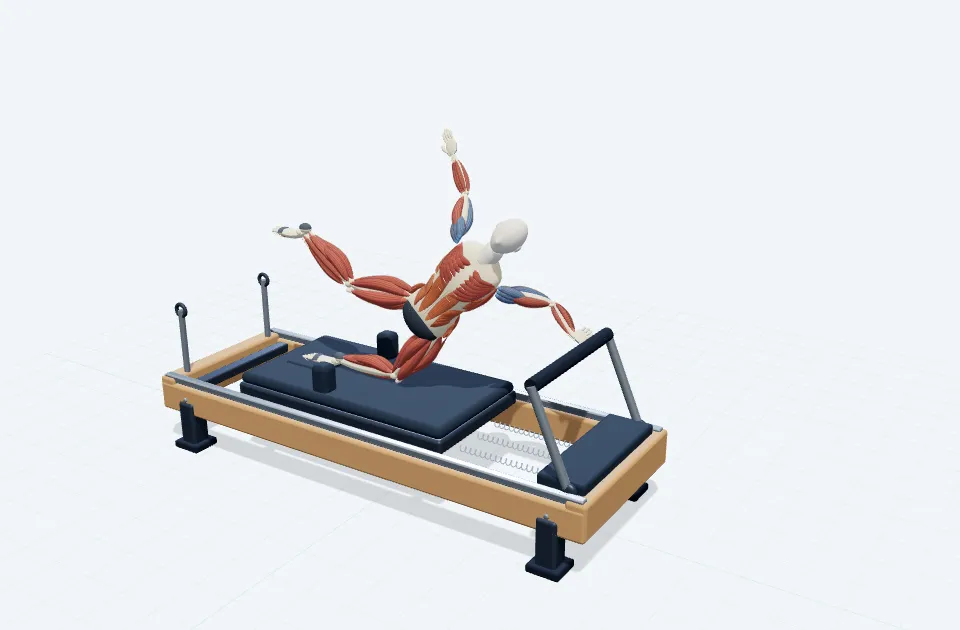
Watch in 3DFeet in the straps, the legs reach out on a diagonal. Compare where the legs go with how steady the pelvis stays.
Watch in 3DOnce the supine exercises feel familiar, compare the ones where support moves to the sitting bones, the hands and knees, or the knees. Standing on the machine and the jump board change support the most; if you do them, learn them with an instructor.
On a machine with a moving carriage, it helps to separate the parts that move from the parts that support. Pause the 3D and look from the side or from above for the following.
In footwork, check where the feet meet the bar and whether the knees point the same way as the toes. When the legs are straight, see whether the knees are pushed back into a locked position.
Do the pelvis and the rib cage stay where they are while the legs or arms move? From the side, look for the lower back arching at one point, and for the spine curling one section at a time.
When pulling the straps or supporting on the bar, check that the shoulders are not lifting towards the ears or pressing hard into the shoulder rests, and that the arms move from the shoulders without tension gathering in the neck.
The breathing in each lesson is one example, matched to the stages of the movement. When to breathe in and out differs between teachers. First check that the breath keeps going and is not held.
Specific to the machine: watch not only the push away but also the way back. Does the carriage snap home under the pull of the springs, or does it return at an even pace?
Many studios run classes for people new to the reformer, and most begin lying on the back with footwork. Whether a class suits you depends on the studio, the instructor and your own situation, so ask the studio before you book. This page explains the machine and the movements; it does not assess whether an exercise is right for you.
There is no fixed order. The choice depends on the classes you can get to, what you want from them and how your body feels, so a trial class or a conversation with an instructor is the surest way to decide. Equipment and support are compared on the page about mat and reformer Pilates.
Yes. You do not need any equipment to watch the 3D lessons or read the notes. They are for checking the names of exercises you learn in the studio and for going over the setup and the flow of a movement before or after class. When you use a reformer, learn the settings and handling of that machine from your instructor.
There is no single right answer. Spring colours and tensions differ between manufacturers and models, and the same exercise can be set up differently for different goals, body sizes and levels of experience. The springs shown in the 3D model are there to observe the movement, not a setting for your machine. Ask your instructor.
Pilates is taught by several schools and training organisations, and the same name can come with a different foot position, machine setting or purpose. This page uses common English names. Rather than going by the name alone, compare the starting position and the points of support.
Talk to a medical professional or your instructor before the class. This site is for observing movement; it does not diagnose or decide whether an exercise is suitable for you. Stop if you feel pain or discomfort, and do not try to match the positions or angles of the 3D model.
The lessons centre on the reformer and do not cover every Pilates machine. They range from preparatory movements to advanced exercises, so not all of them are for beginners. The 3D model is a schematic for observing positions and movement. Methods differ between schools and teaching goals, and the model is not a target for your own positions or angles.
When you use a reformer, learn the settings and handling of that model from an instructor, and stop if you feel pain or discomfort. Being produced under the supervision of CoconeRu. Move, reviewed in stages.
References and review status