Reformer Pilates exercises: 51 names, illustrations and 3D lessons
Explore reformer exercises by position. Read English preparation and movement notes, then inspect the model from different angles.
Browse pictures, names and positions
Each illustration shows one frame from the actual 3D lesson. This is an observation library, not an exercise sequence. Review movements you have learned and follow your instructor’s setup.
Open the reformer studioSupine
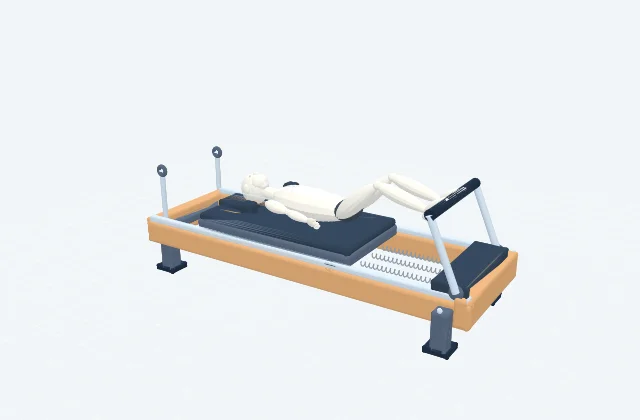
Footwork
Press through the feet and extend the knees and hips together, moving the carriage away.
Keep the legs long without locking the knees or arching the lower back.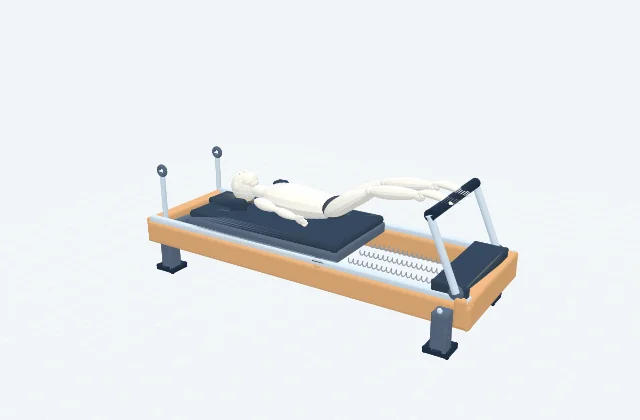
Heel Raises
Lower both heels through ankle dorsiflexion while keeping the knees extended.
Maintain forefoot contact and knee alignment, with the heels at the same height.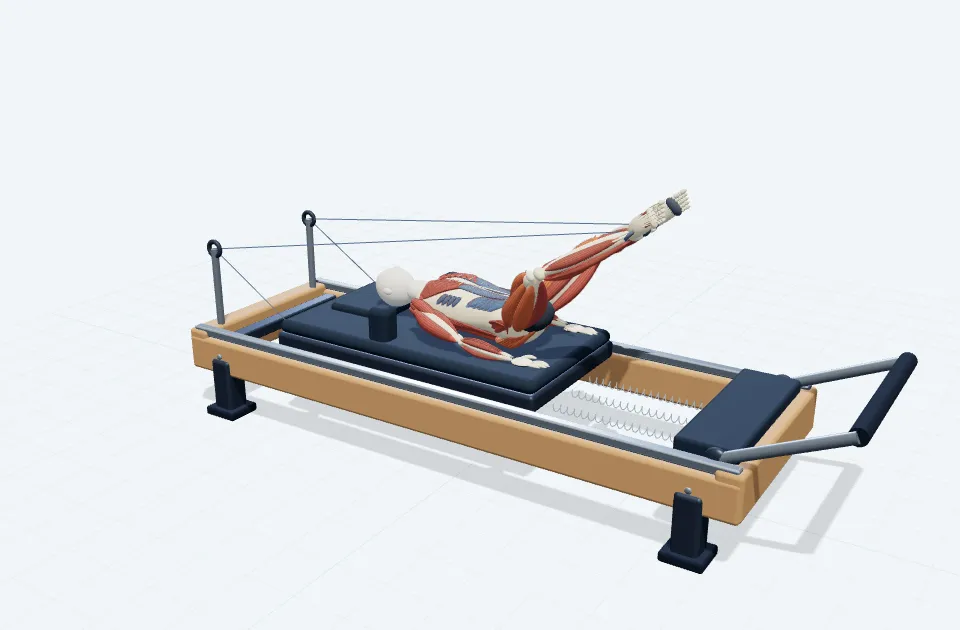
Frog
Reach the heels away and extend both legs diagonally forwards.
Maintain the relationship between the pelvis and rib cage and keep both legs equally long.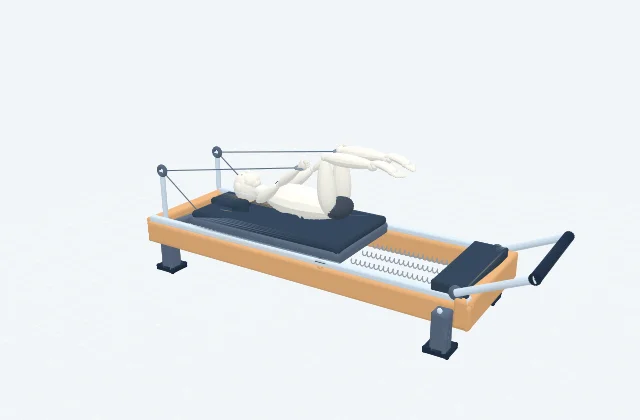
Supine Arm Press
Keep the elbows long and lower the arms towards the sides of the body.
Reach through the fingertips without changing the position of the rib cage or pelvis.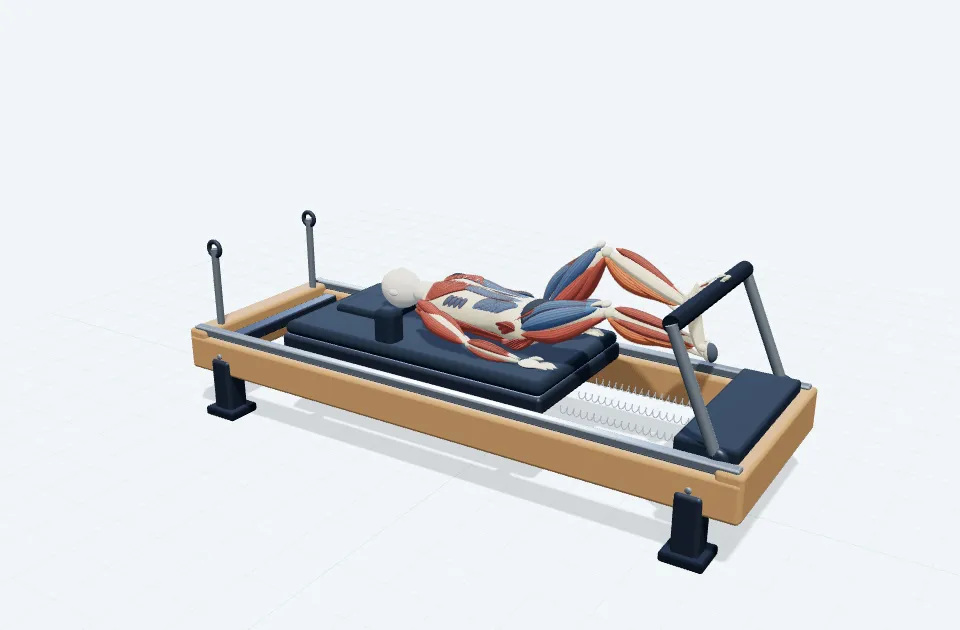
Running
Lower the right heel while bending the left knee. Keep both forefeet on the bar.
Extend both legs briefly and bring the heels level before changing sides.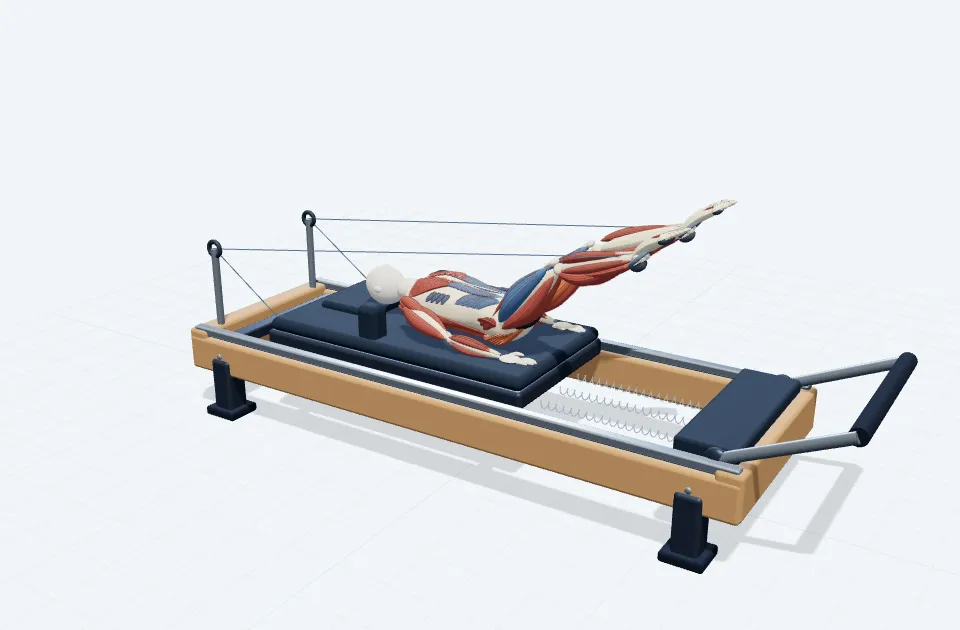
Leg Circles
Lower the legs a little and open them sideways from the hip joints.
Circle the open legs upwards while maintaining knee position and pelvic support.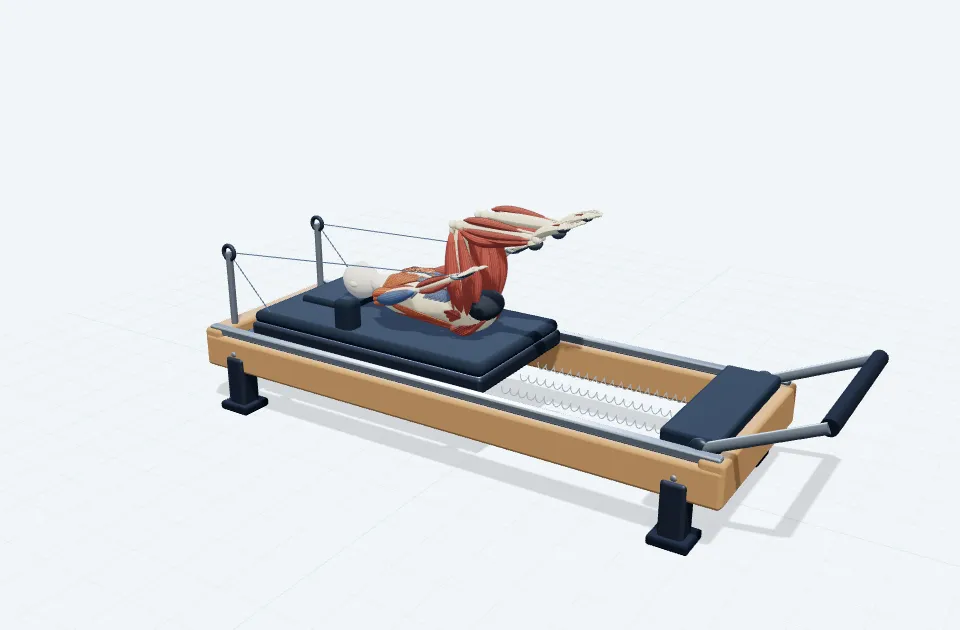
Supine Arm Circles
Move both arms from the shoulders, lowering the hands towards the sides.
Keep the arms long as they circle outwards. Avoid lifting the shoulders or flaring the ribs.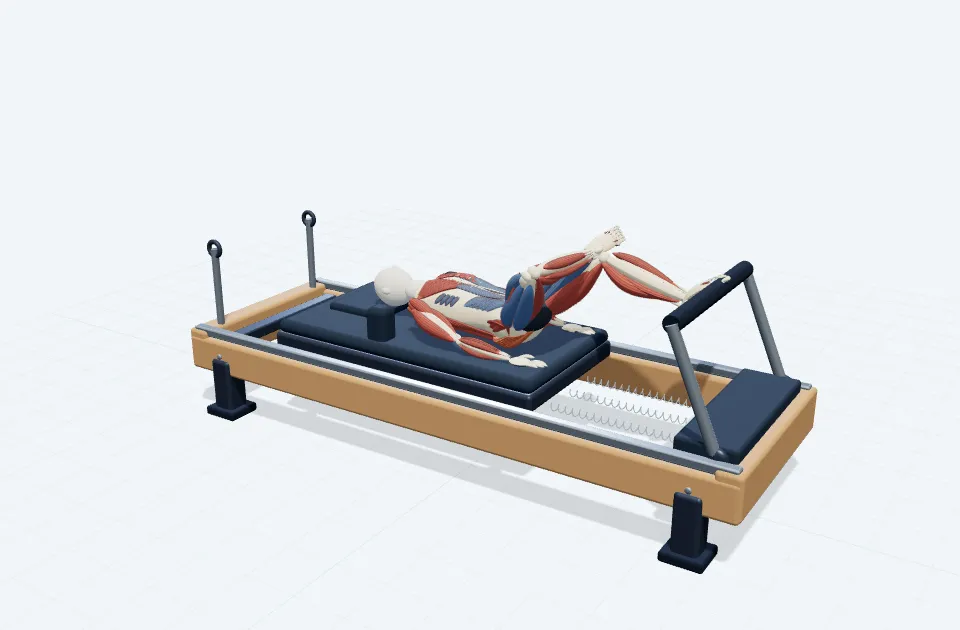
Hip Stretch
Extend the supporting leg and move the carriage away slowly.
Keep the crossed ankle supported and observe the position of the pelvis and open knee.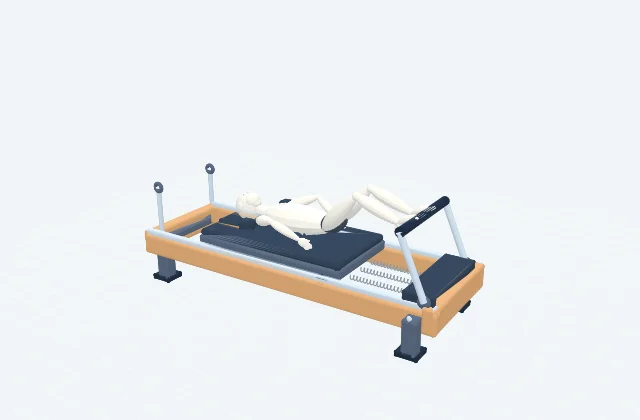
Pelvic Tilt
Tilt the pelvis backwards, reducing the space under the lower back.
Observe the pelvic tilt without lifting the hips high.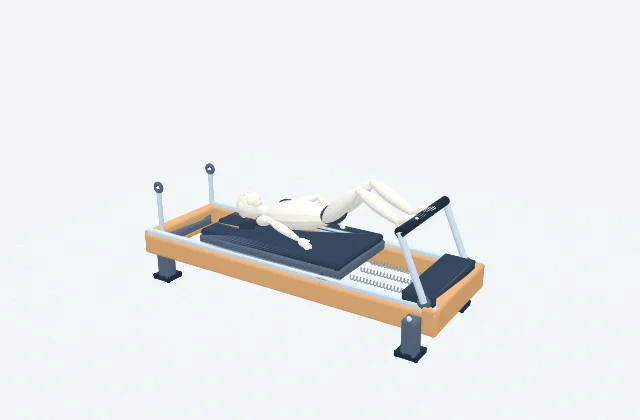
Half Hip Lift
Tilt the pelvis backwards and lift the hips a little from the carriage.
Keep the shoulder blades supported rather than lifting into a high bridge.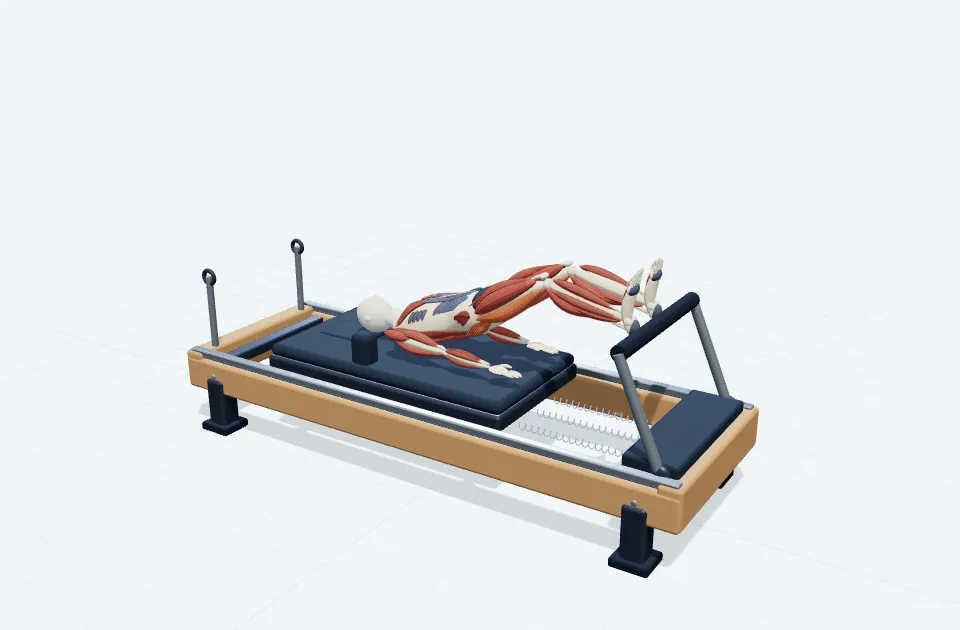
Eccentric Hip Lift
Extend the knees to move the carriage away while maintaining pelvic height.
Observe whether the hips change height as the carriage moves.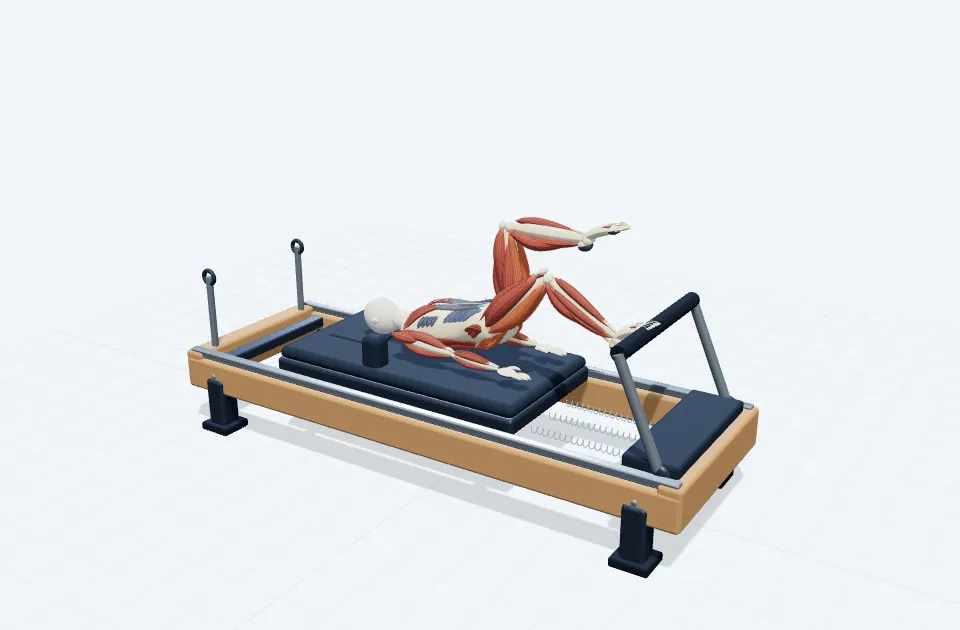
Single Leg Hip Lift
Press through the supporting foot and lift the hips a little.
Avoid dropping the pelvis towards the raised leg.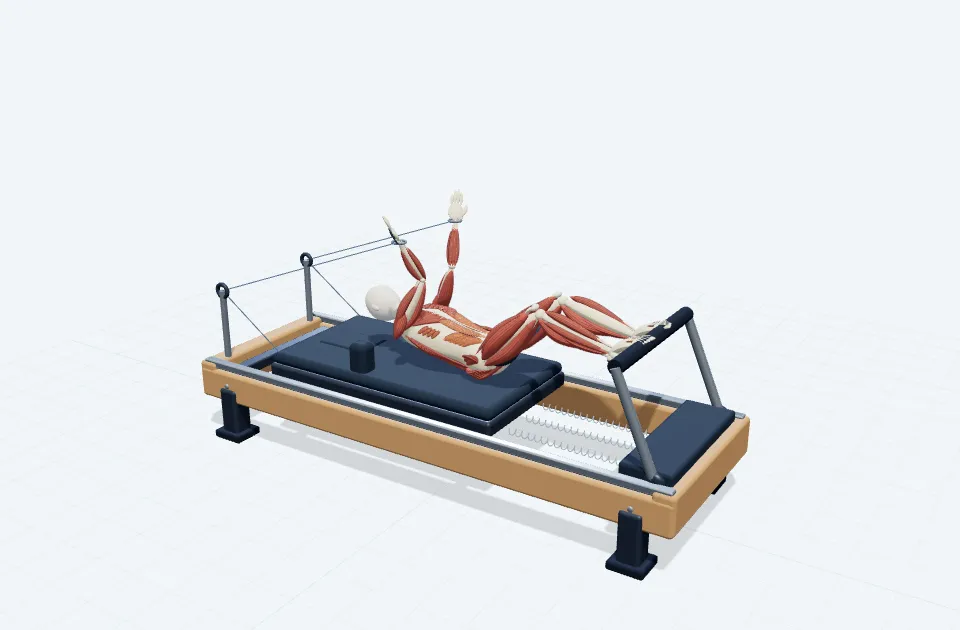
Curl Up
Reach the arms towards the thighs as the upper trunk curls forwards.
Curl through the rib cage rather than pulling the chin forcefully towards the chest.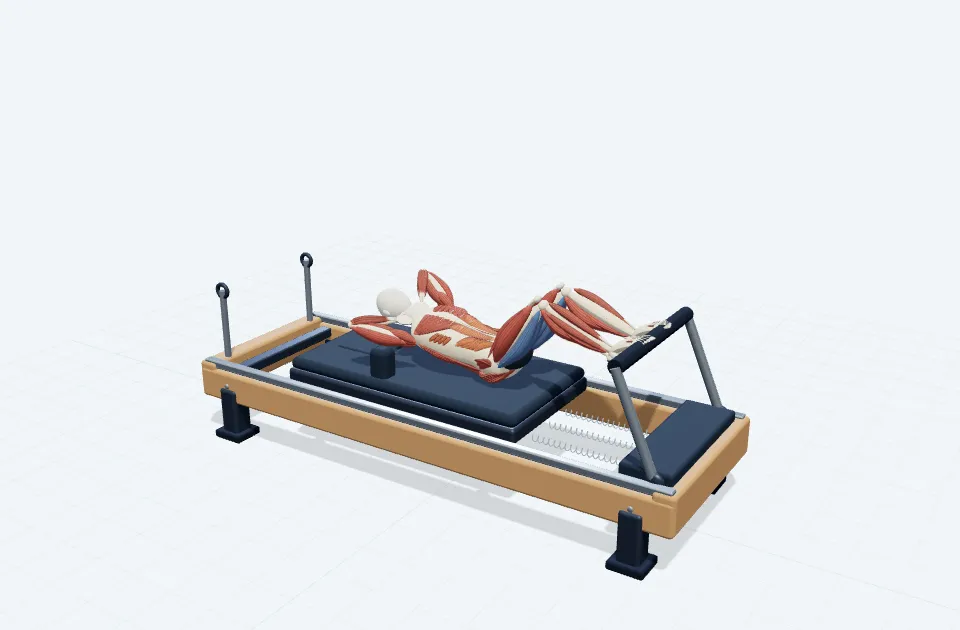
Twist Curl Up
Turn the rib cage towards the selected side while curling the upper trunk.
Avoid pulling the neck with the hands.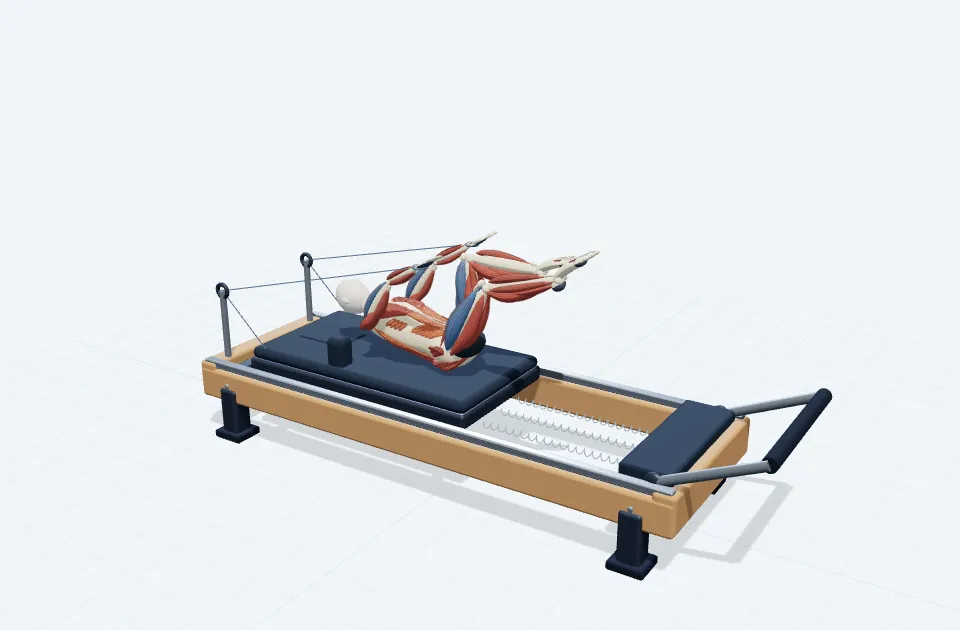
Curl Up · Single Leg Stretch
Curl the upper trunk, lower the arms and reach the selected leg forwards on a diagonal.
Do not arch the lower back to lower the leg further.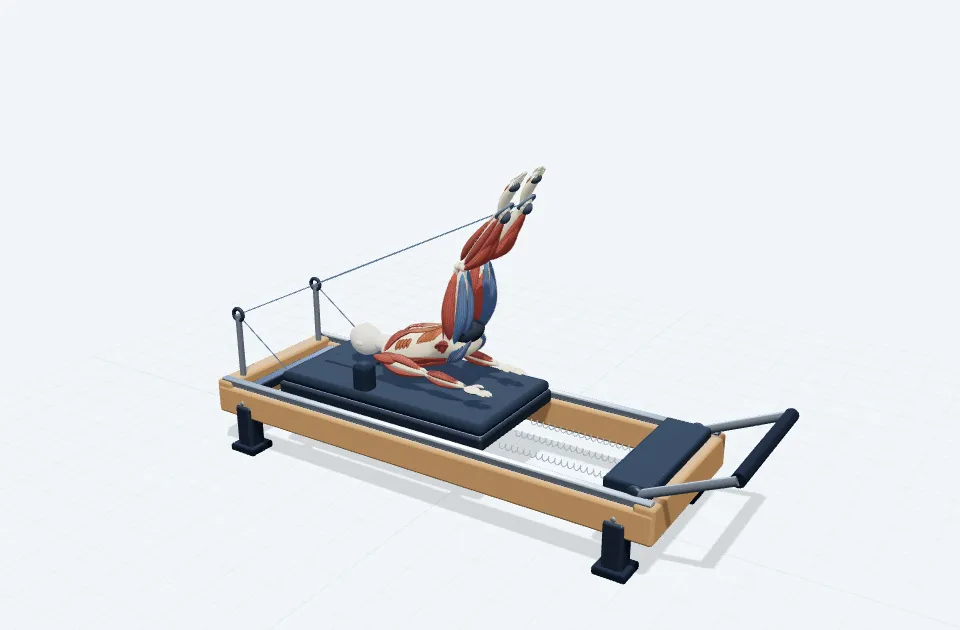
Roll Over
Send the legs upwards and make a small curling lift of the pelvis and lower back.
Do not use leg momentum to roll towards the head.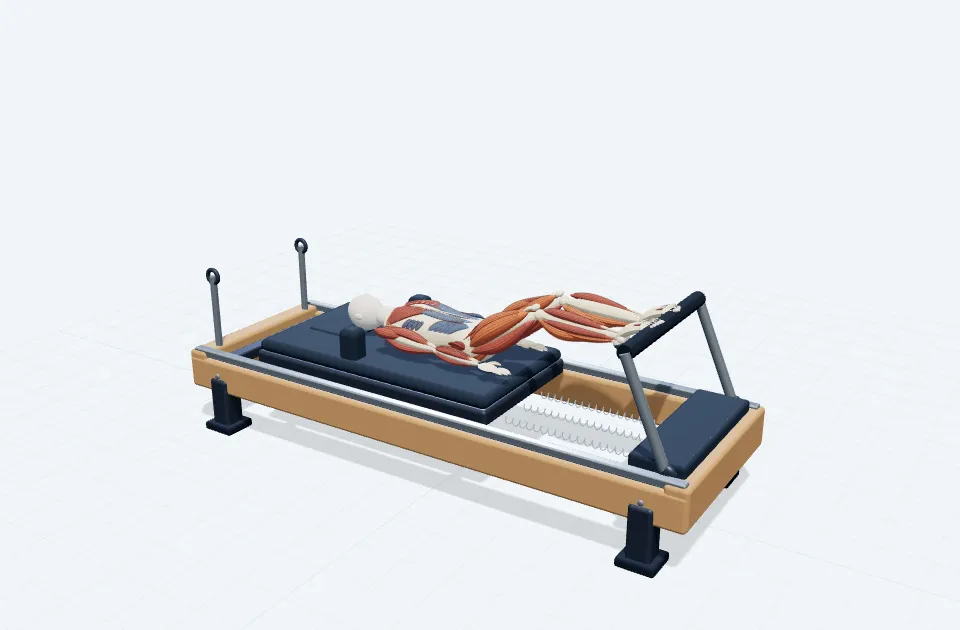
Reformer Jump
The legs extend to press off and the feet leave the bar.
Observe the airborne phase and the relationship between the pelvis and rib cage.Seated
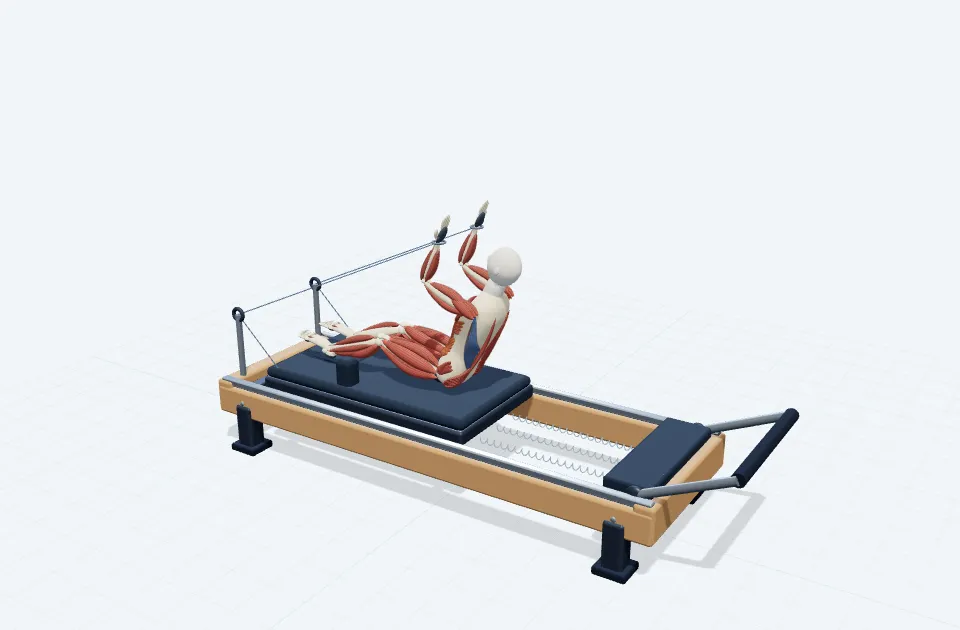
Roll Up & Down
Tilt the pelvis backwards and round the back as the upper body rolls towards the rear.
Observe the model maintaining the elbows at approximately a right angle. This is a model position, not a universal target.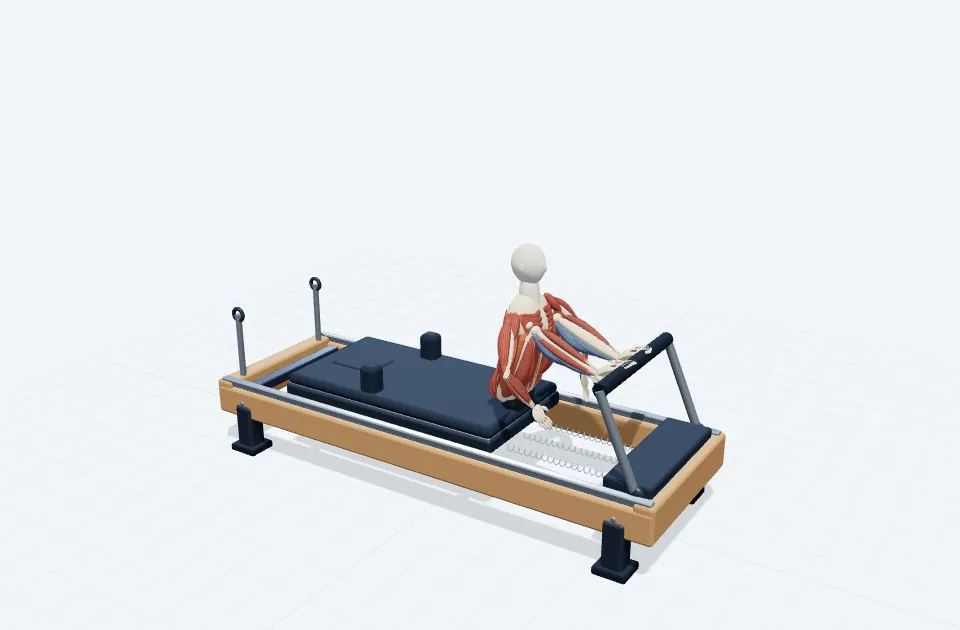
Round Back
Maintain the rounded back as the legs extend, with a small change at the ankles.
Avoid suddenly releasing the rounded position.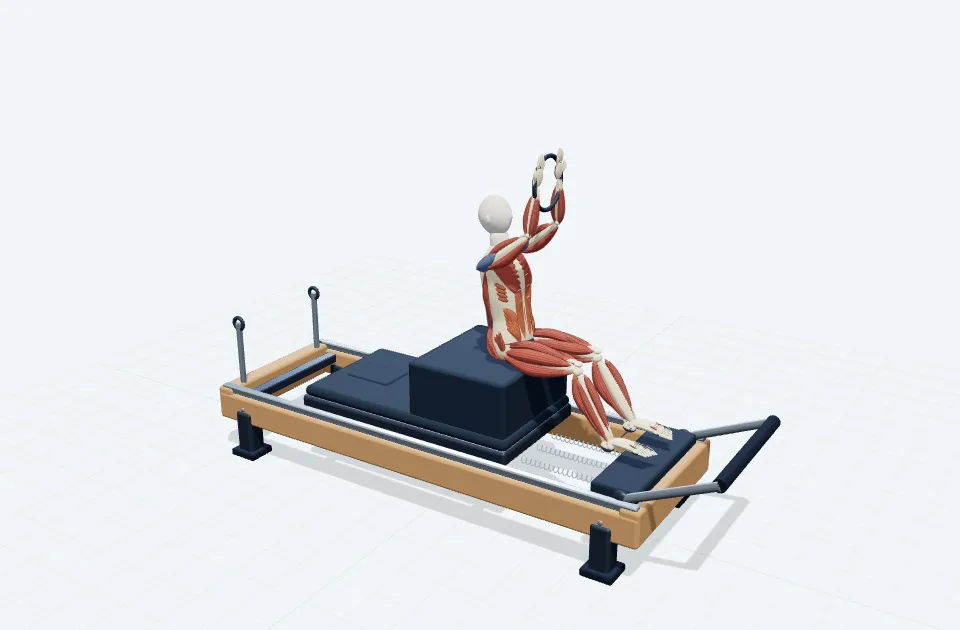
Trunk Movement
Hinge the trunk backwards from the hips while raising the arms overhead.
Maintain length from the pelvis to the head. The displayed shoulder angle is not a required range for every person.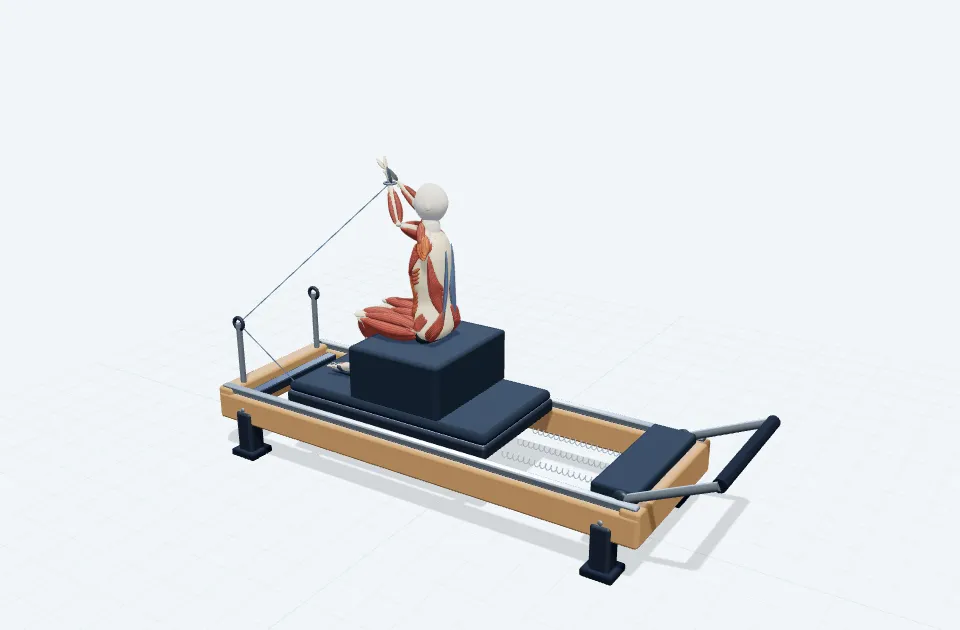
Seated Twist Reach
Reach both hands forwards and upwards while rotating the rib cage away from the arms.
Keep both sitting bones supported.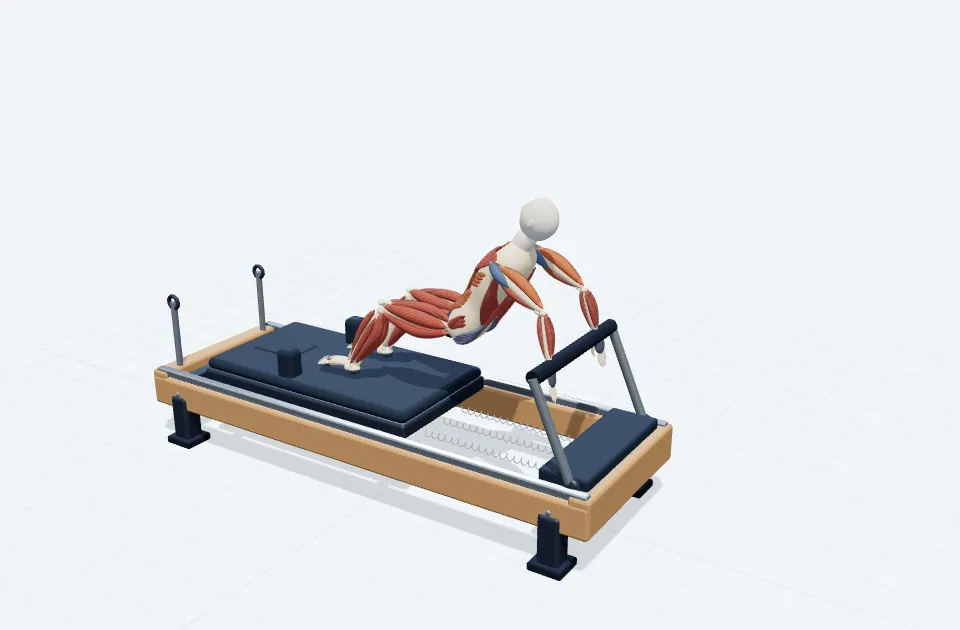
Reverse Plank & Flexion
Support through both hands, extend the legs and lift the chest.
Keep the hands supportive without locking the elbows.Prone
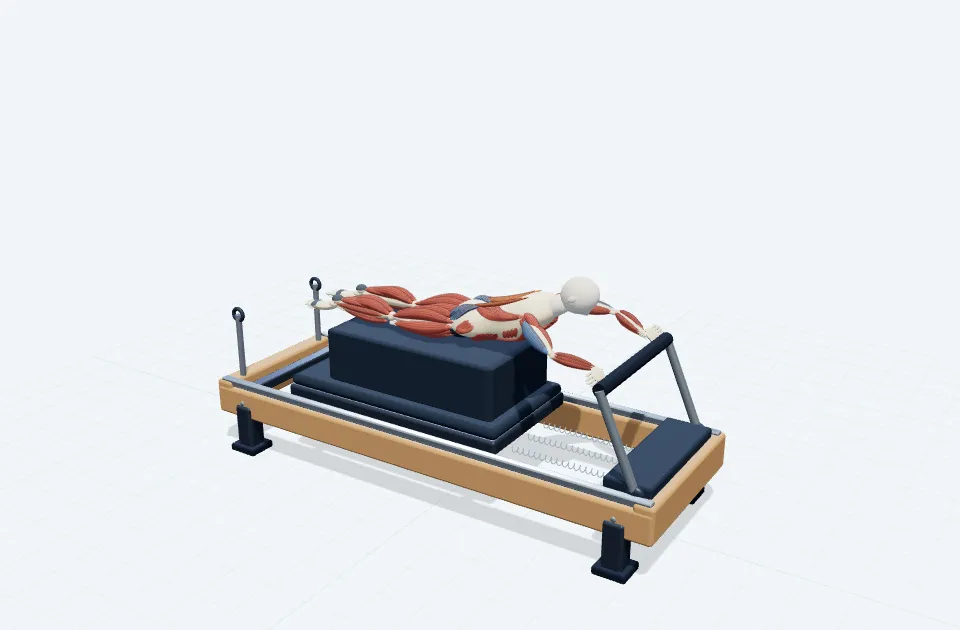
Swan on Long Box
Support through the bar and lengthen the chest forwards and upwards.
Avoid extending only through the lower back; observe length through the chest.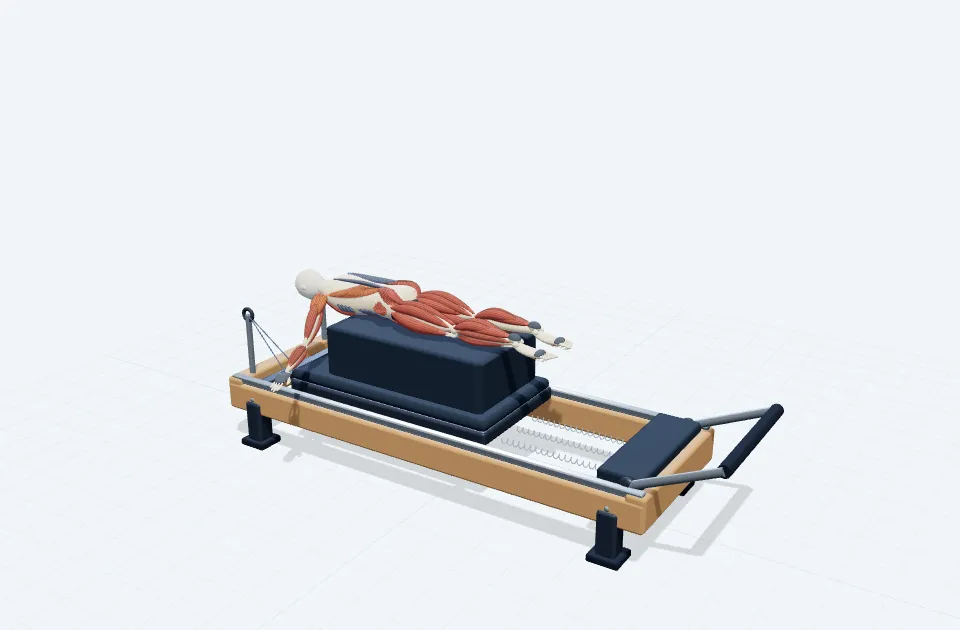
Prone Pull & Arm Circle
Draw the arms towards the sides and move them through an outward arc.
Avoid strongly arching the lower back to pull the arms further.Side-lying
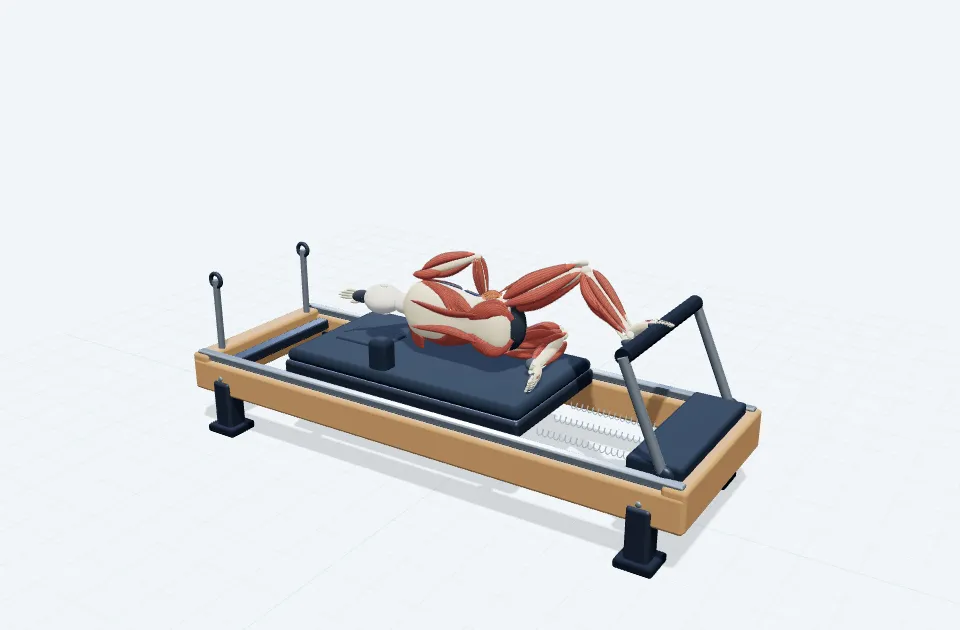
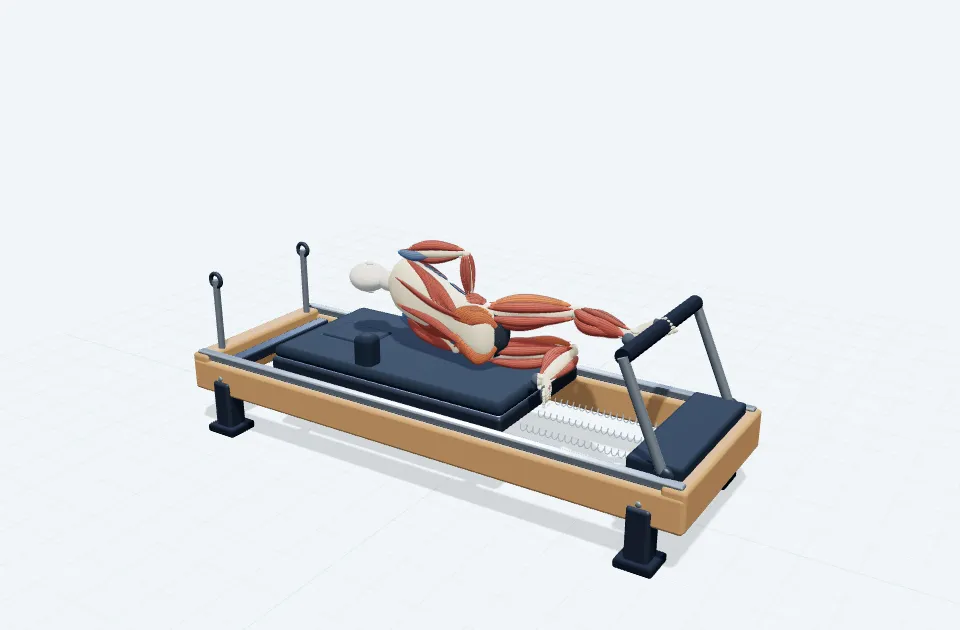
Quadruped
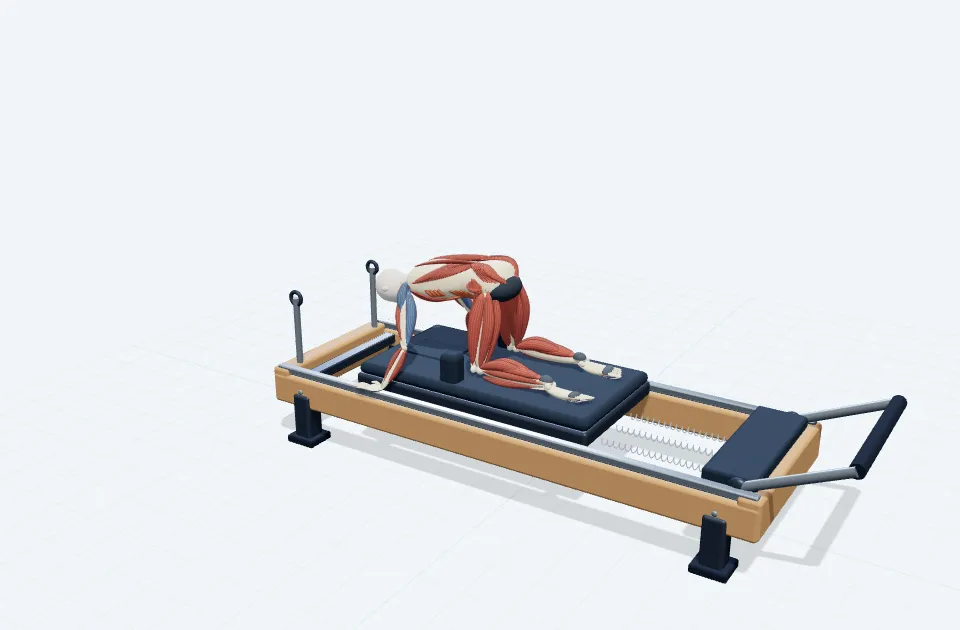
Resistance Cat Back
Tilt the pelvis backwards, round the back and draw the knees towards the hands.
Observe the whole back rounding rather than only lowering the head.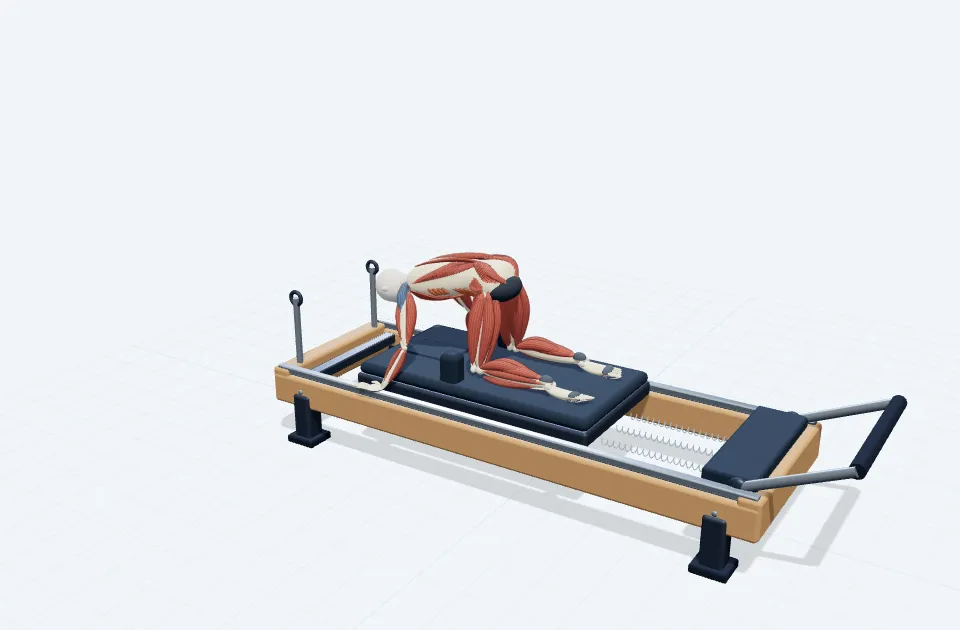
Lateral Resistance Cat
Bring the shoulder and pelvis on the selected side closer together while rounding the back.
Observe the pelvic movement as well as the sideways curve of the back.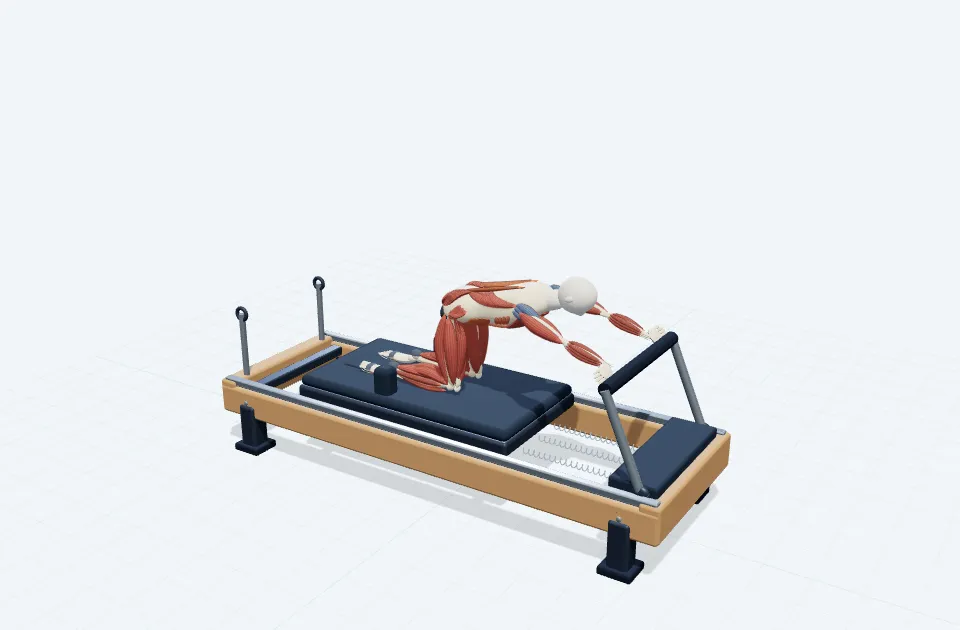
Moving Cat Back
Send the carriage backwards and lengthen the chest between the arms.
Observe the rib cage and pelvis together with the shoulders.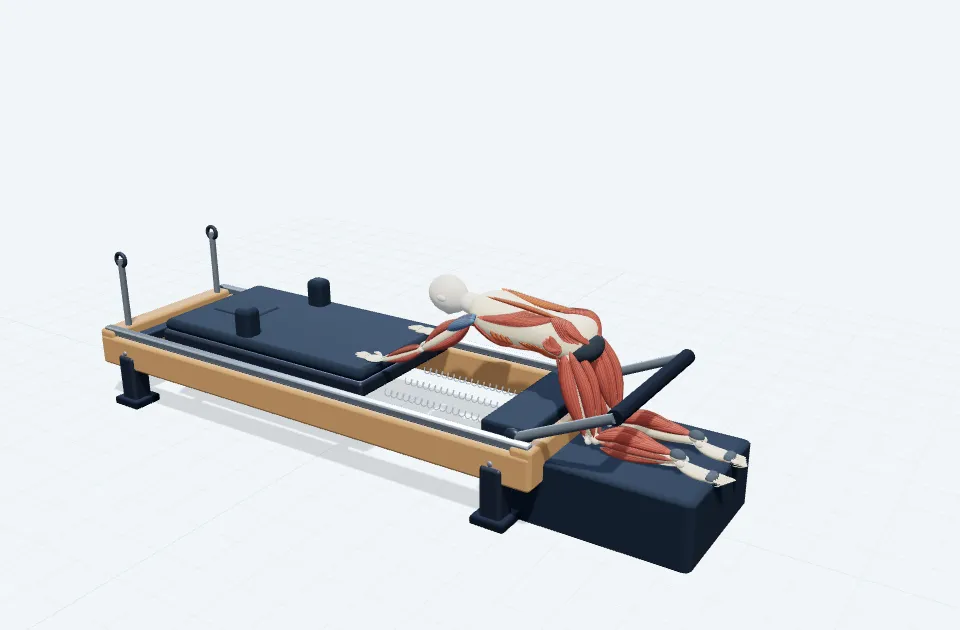
Cat Back · Long Box
Push the carriage with the hands and lengthen the arms and back.
Observe length through the rib cage rather than only arching the lower back.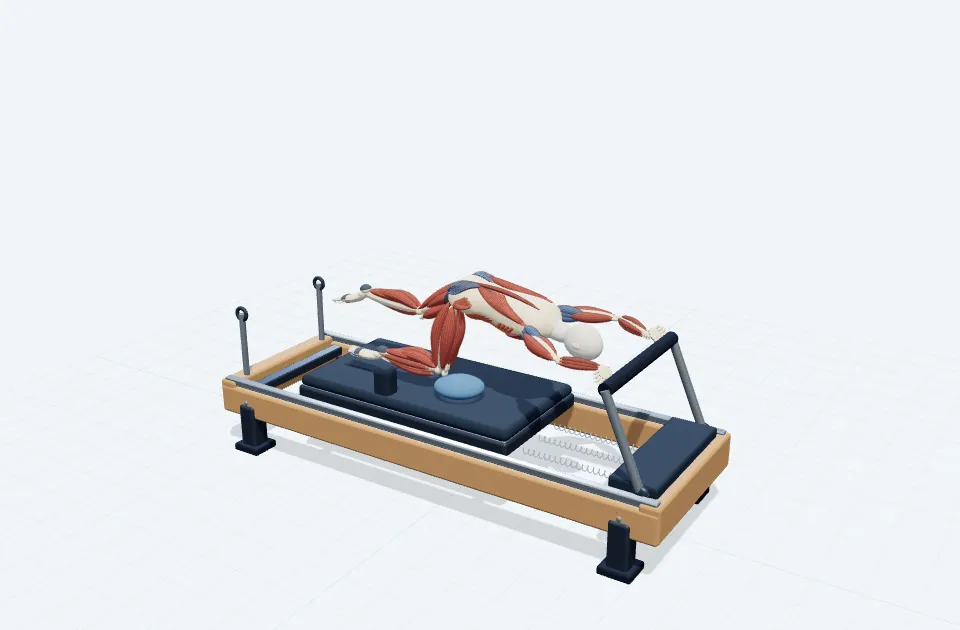
ZOA Cat Back
Send the opposite leg backwards while bringing the rib cage and pelvis closer together.
Use the supporting knee as a reference for pelvic position.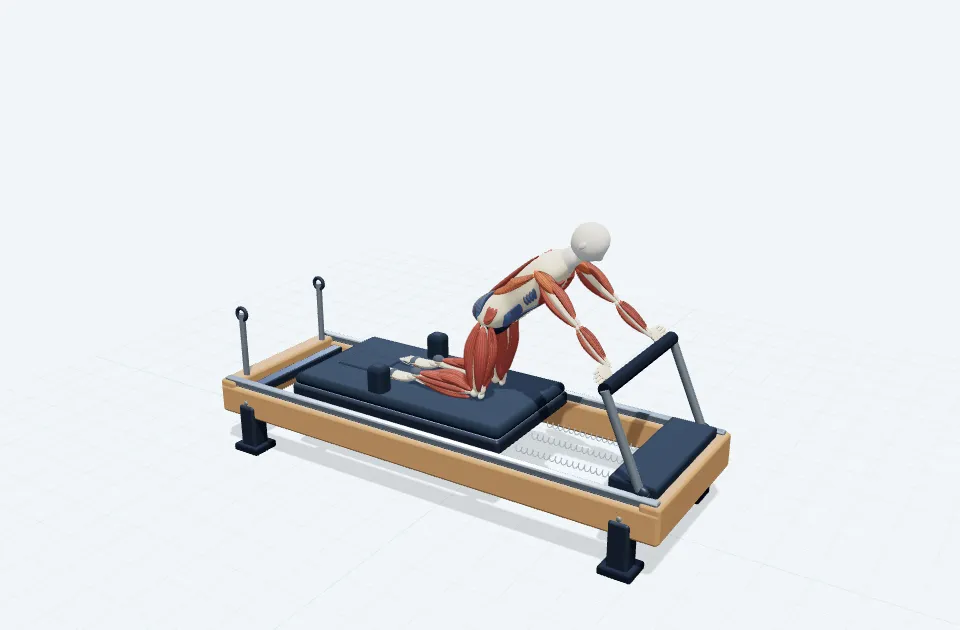
Hip & Shoulder Movement
Keep the elbows extended while flexing the shoulders and sending the carriage backwards.
Observe movement at the shoulders with the arms remaining long.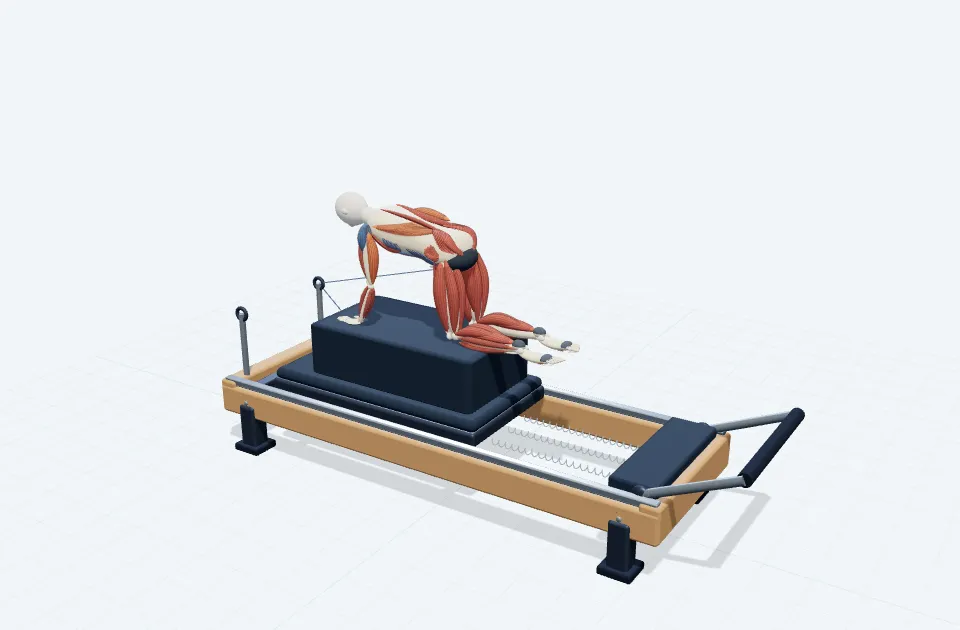
Quadruped Pull & Extension
Draw the elbow towards the side, then extend it while maintaining the upper-arm position.
Avoid twisting the chest to pull the arm further.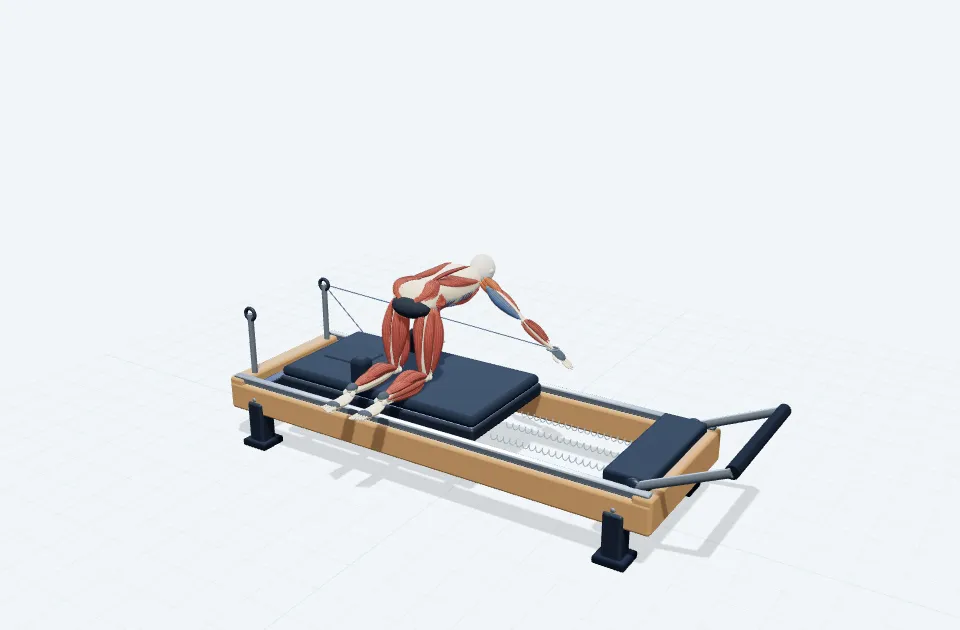
Quadruped Rear Deltoid
With the elbow long, draw the arm sideways through horizontal shoulder extension.
Avoid rotating the trunk with the arm.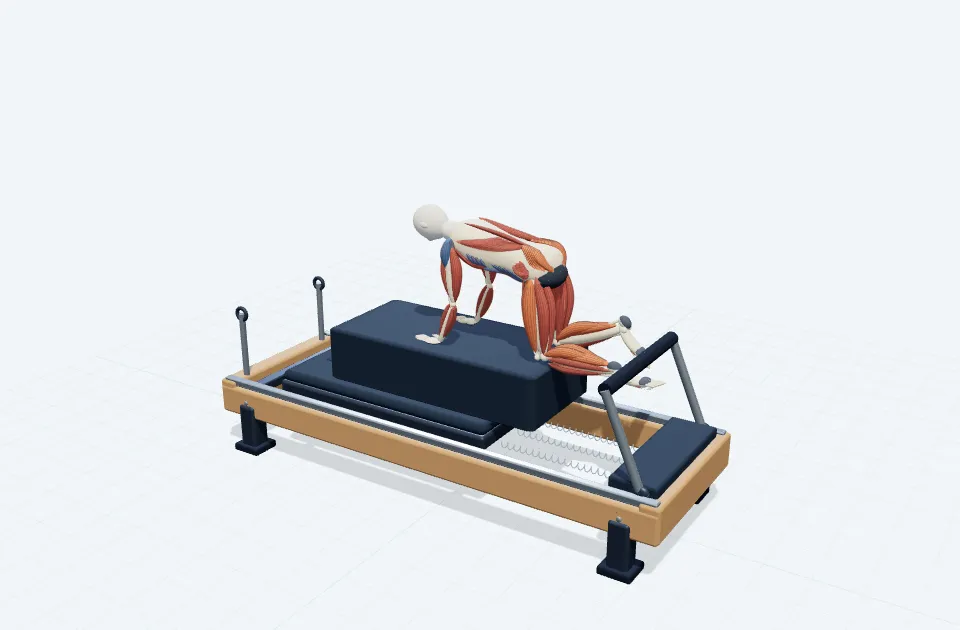
Quadruped Jump
Extend the selected leg to push off, briefly allowing the foot to leave the bar.
During the airborne phase the hands and opposite knee support the trunk.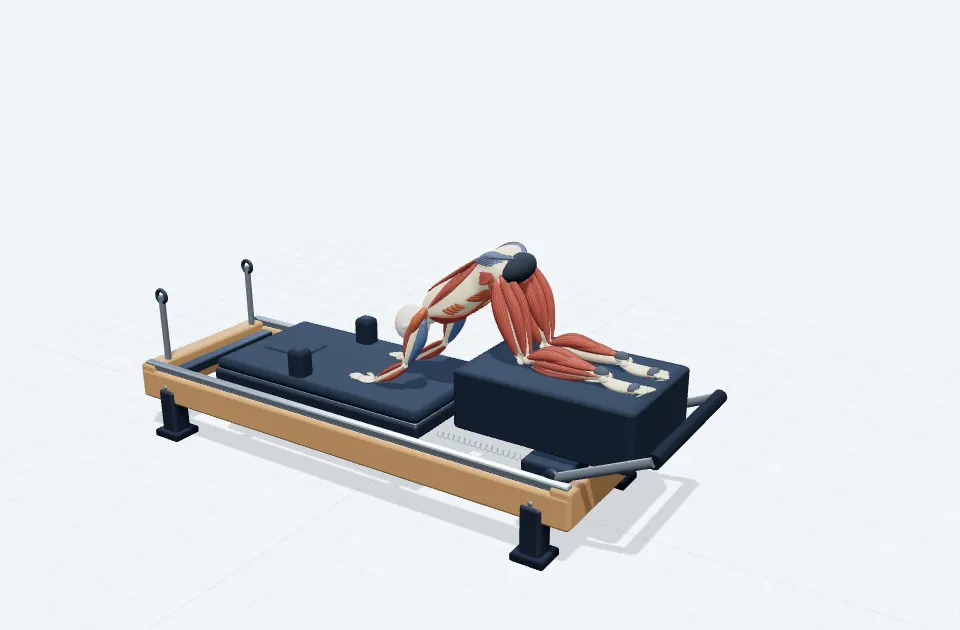
Quadruped Trunk Resist
Maintain all four support points while sending the carriage away with the hands.
Support the trunk without rotating the pelvis.Kneeling
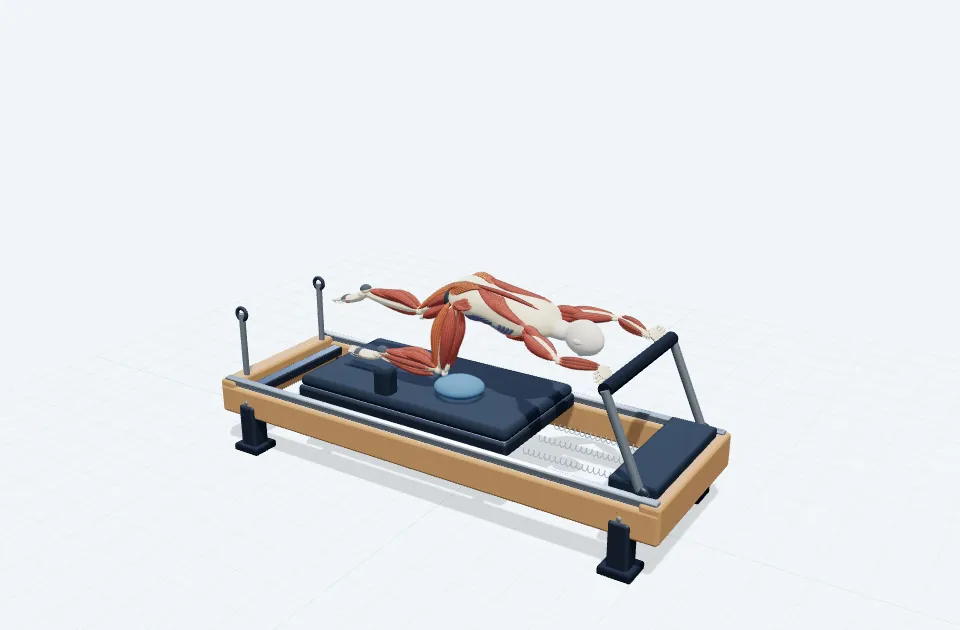
Kneeling Single Leg Deadlift
Hinge the trunk forwards at the hip and extend the opposite leg backwards.
Observe folding at the hip rather than bending from the lower back.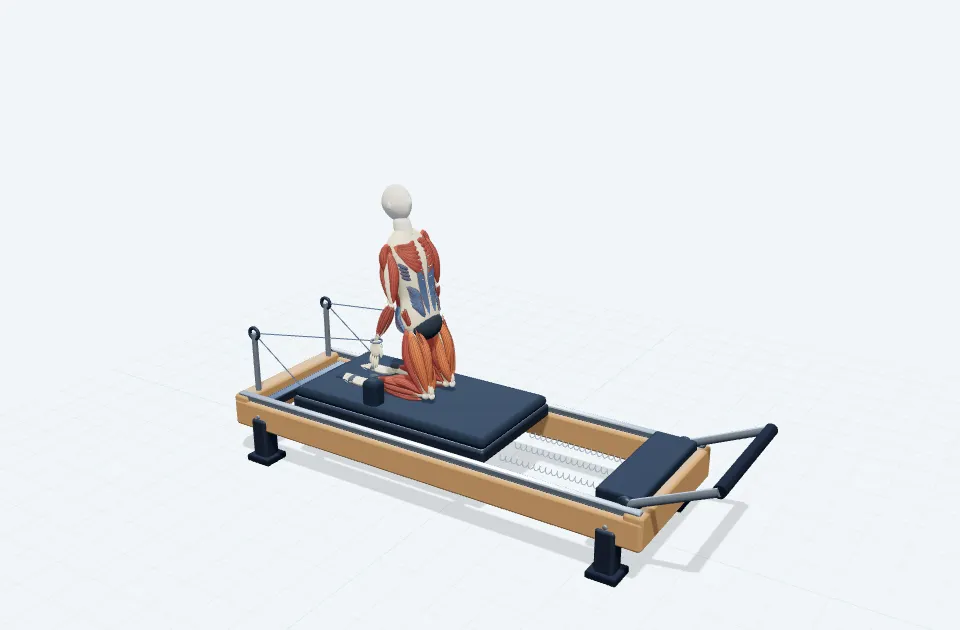
Kneeling Quad Eccentric
Maintain length from knees to head and lean the whole body backwards, lengthening the front of the thighs.
Avoid folding at the hips.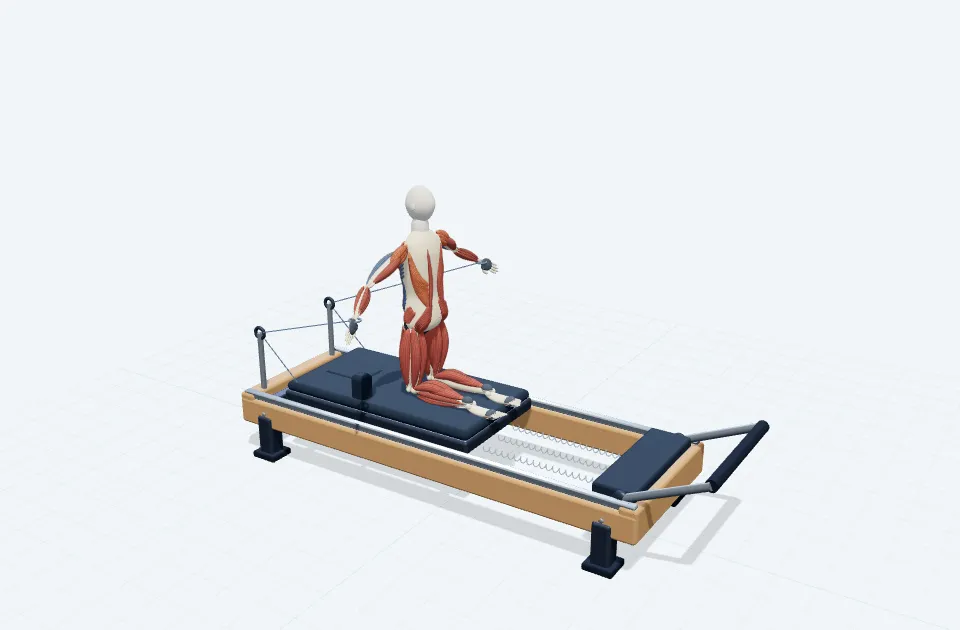
Tall Kneeling Shoulder Circle
Circle the arms outwards from the sides and lift them in front of the shoulders.
Avoid rocking the pelvis as the arms move.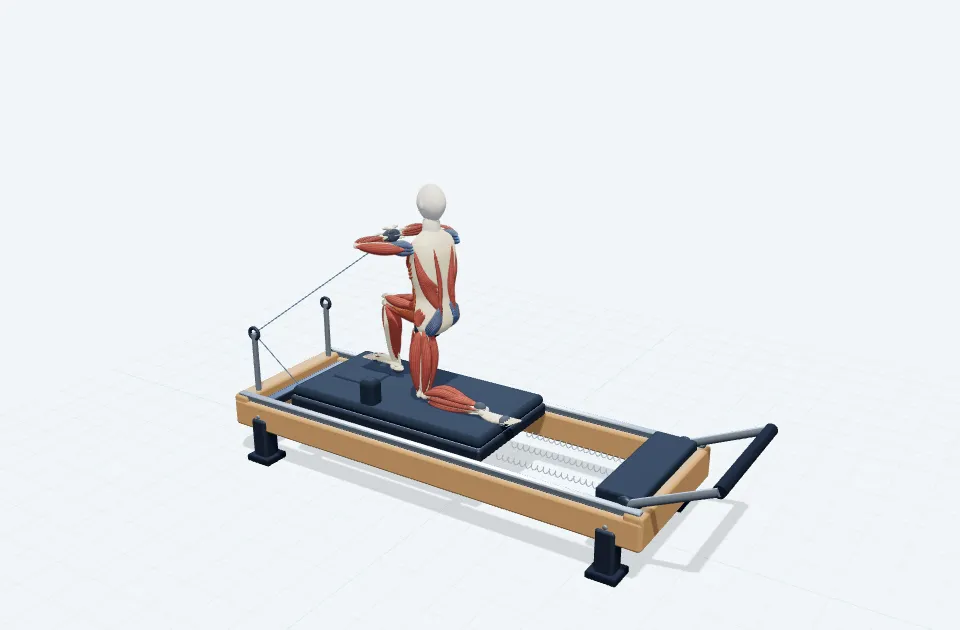
AOS Twist
Rotate the rib cage as the hands travel diagonally upwards from a low position.
Keep the front knee from falling inwards.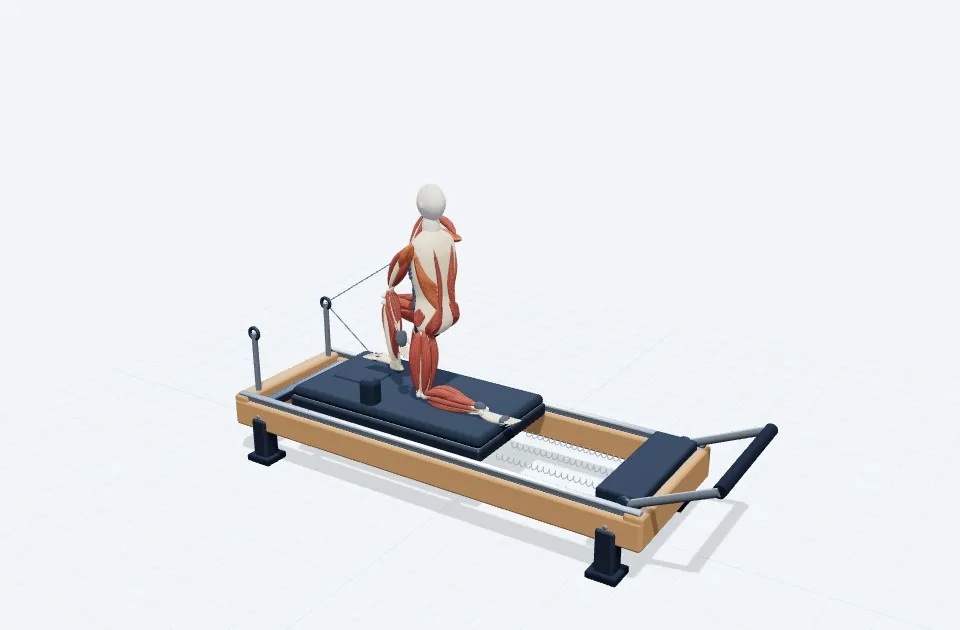
Rowing & Twist
Draw the elbow towards the side while rotating the rib cage in the same direction.
Draw the elbow backwards without shrugging.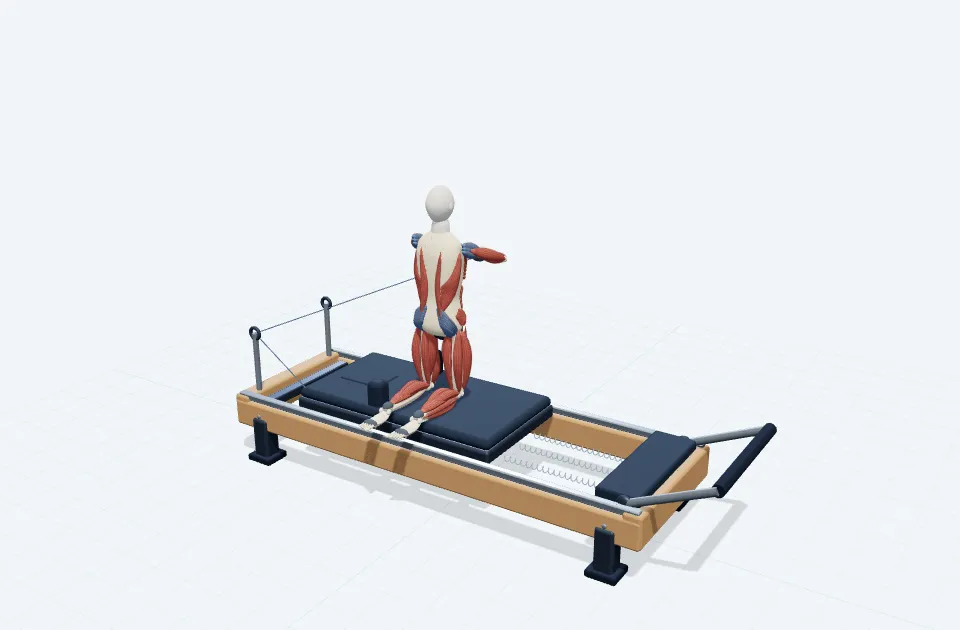
Tall Kneeling Pallof Press
Press the hands forwards while maintaining trunk orientation.
Avoid letting the rope rotate the chest or pelvis.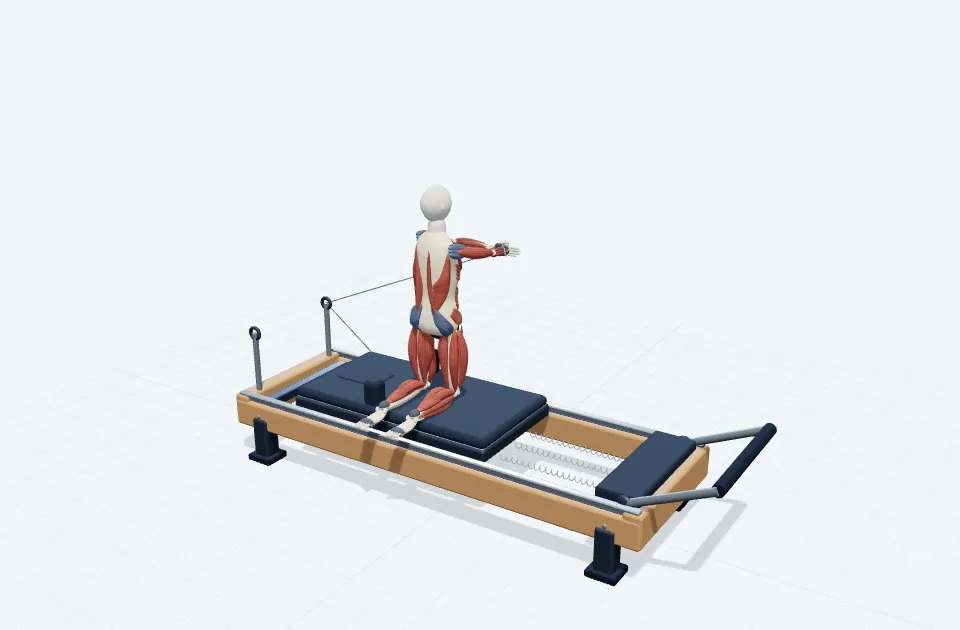
Tall Kneeling Twist
Maintain pelvic orientation while turning the rib cage and hands towards the selected side.
Observe rotation through the rib cage rather than simply swinging the arms.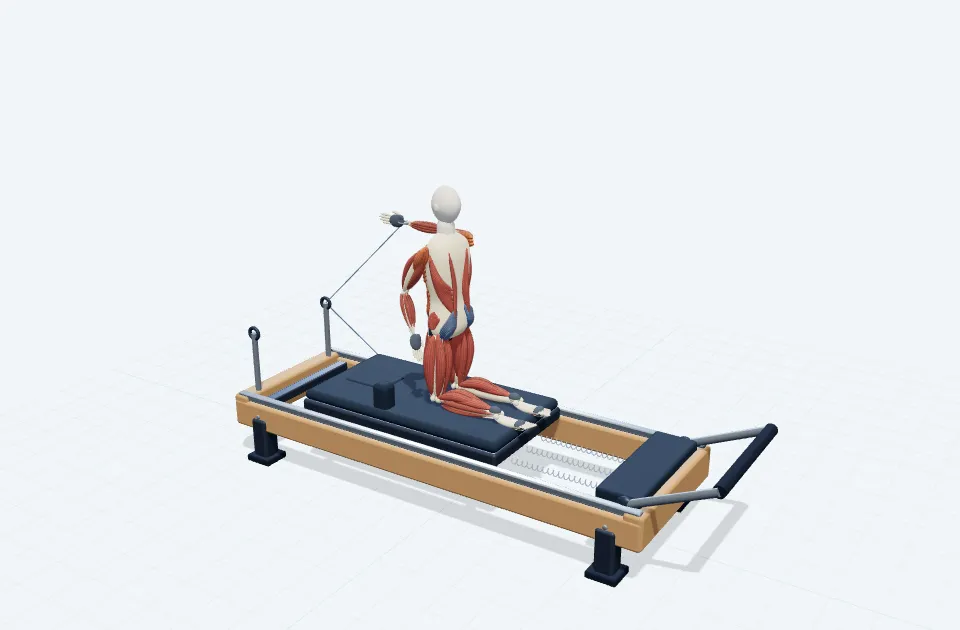
Tall Kneeling Twist Reach
Rotate the rib cage and lengthen the selected arm diagonally upwards.
Avoid pushing the pelvis sideways.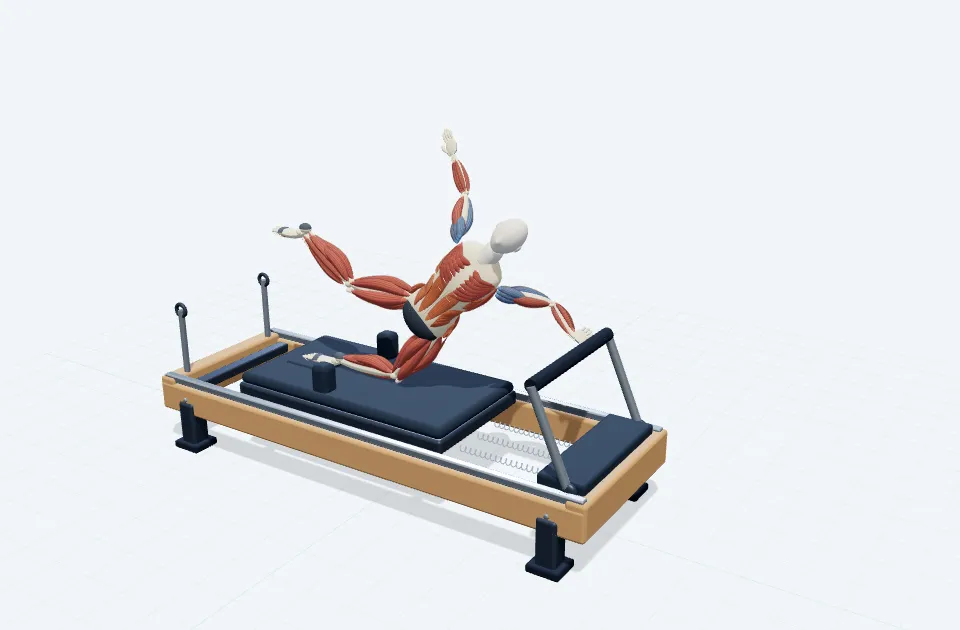
Kneeling Side Plank
Raise the upper arm and extend the leg on the same side outwards.
Avoid sinking into the supporting shoulder.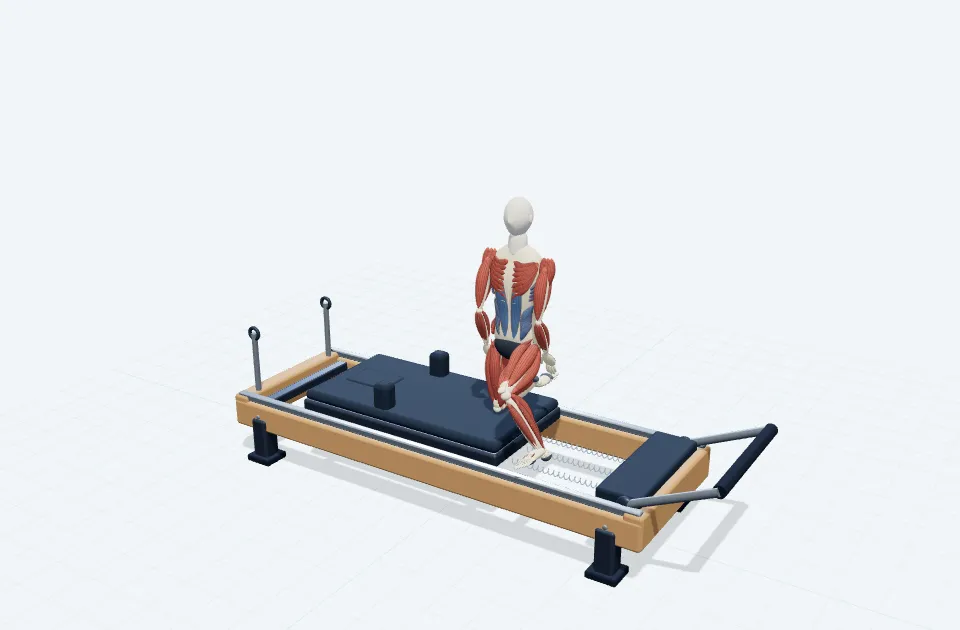
Hip Adduction
Draw the knee on the carriage towards the fixed foot.
Avoid leaning the trunk sideways to pull the carriage.Standing
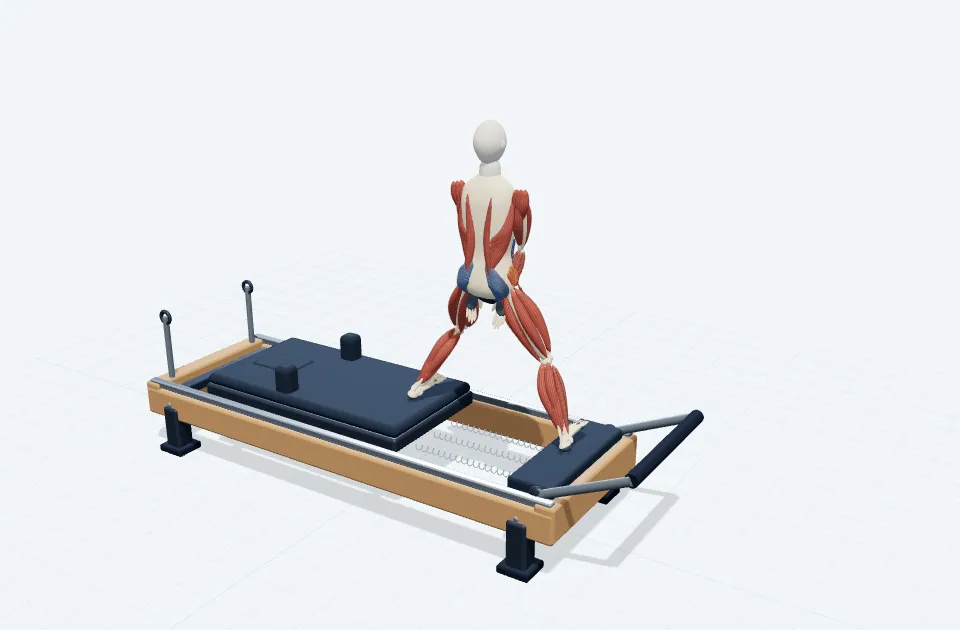
Side Split
Open the legs from the hips while maintaining support through both feet.
Observe a small opening first; the model range is not a target.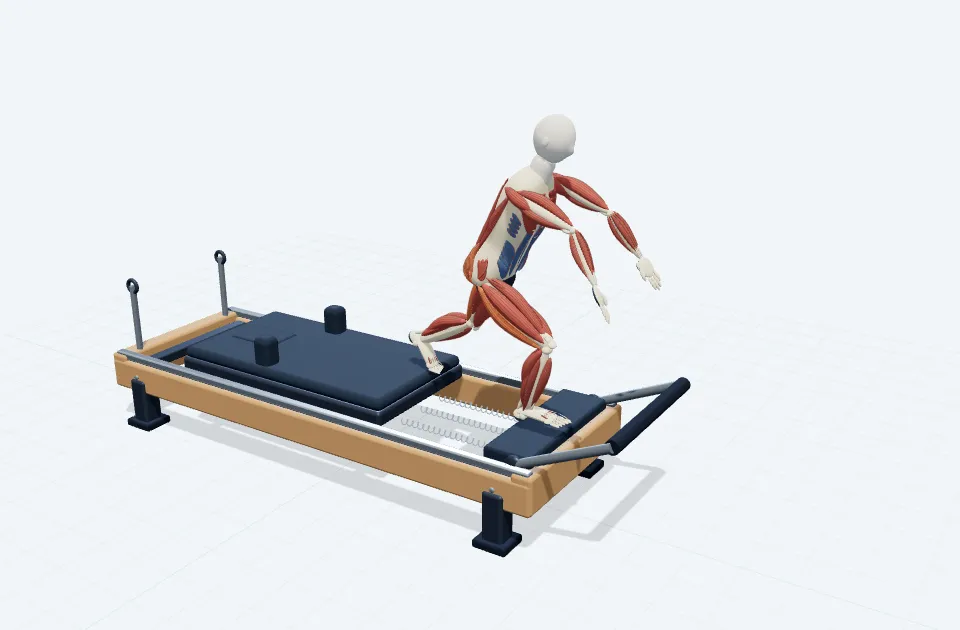
Single Leg Deadlift
Hinge forwards at the front hip and reach the arms forwards.
Observe the fold at the front hip.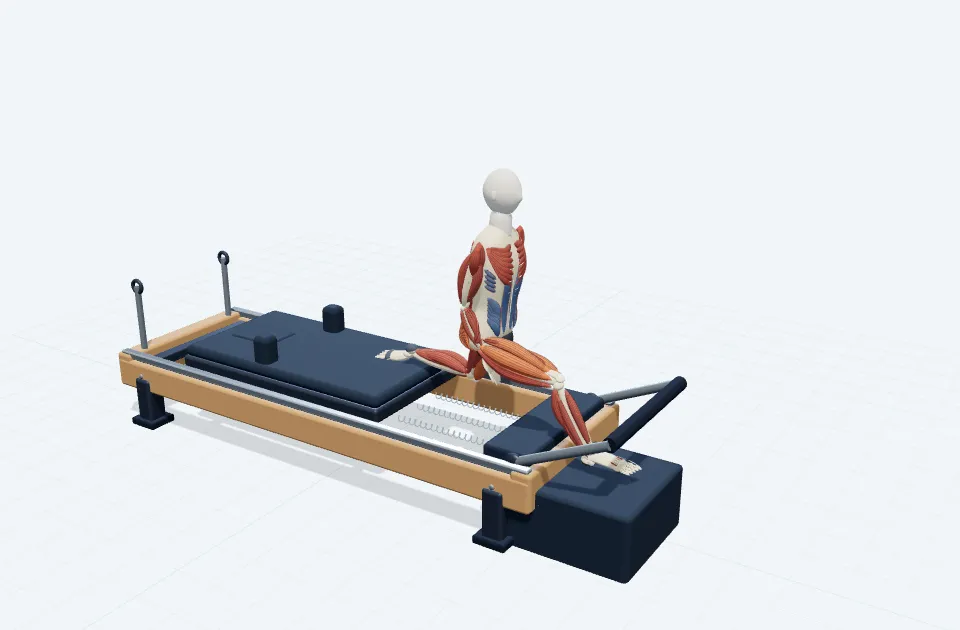
Backward Lunge
Send the rear foot backwards while bending the front knee and hip.
Avoid letting the front knee fall inwards.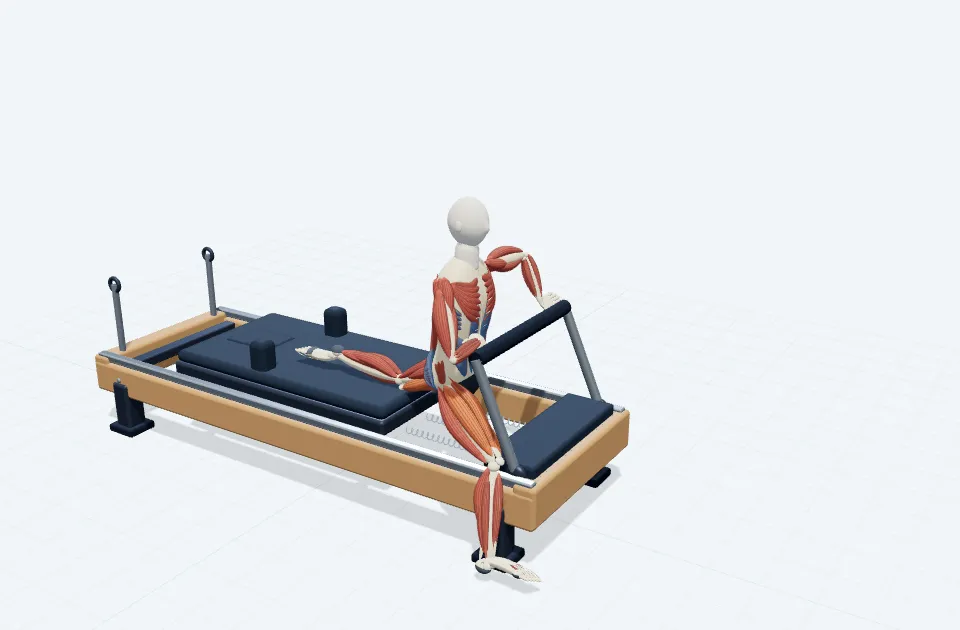
Quad Stretch Lunge
Bend the front knee and lengthen the front of the rear hip gradually.
Avoid increasing the depth by arching the lower back.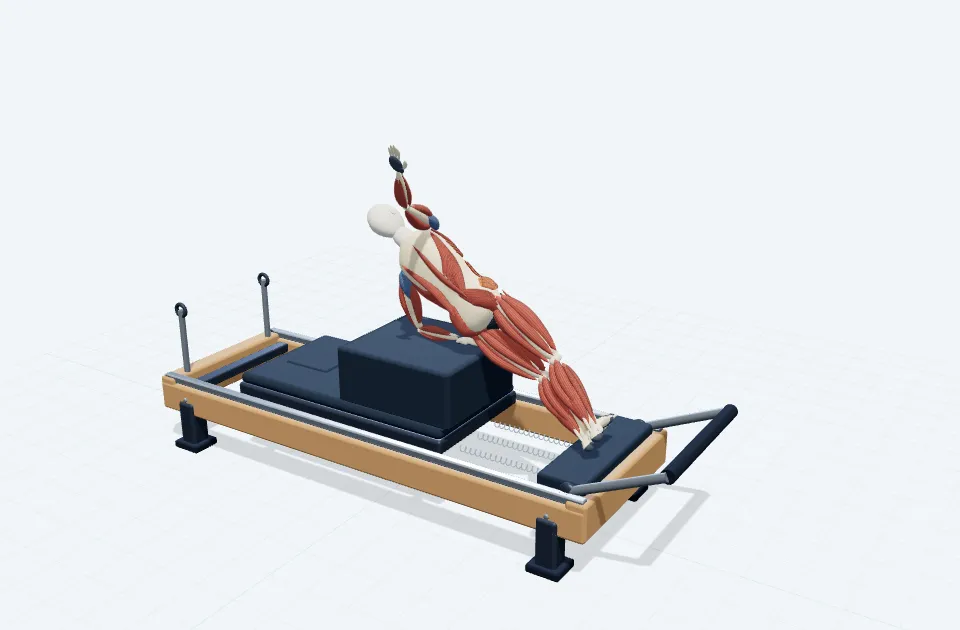
Standing Side Plank
Maintain trunk support while opening the upper arm towards the ceiling.
Press through the forearm without sinking into the shoulder.Keep learning
Read mat and reformer compared, the seminar study guide or the anatomy guide.