Snow Angel on the Roller | Foam roller exercise in 3D
Snow Angel on the Roller: supine (roller along the spine), opening the arms out to the side at the shoulders, and the front of the chest. Preparation, 4 movement phases, points to check and cautions, with a 3D model you can pause and rotate.
← Back to the foam roller library
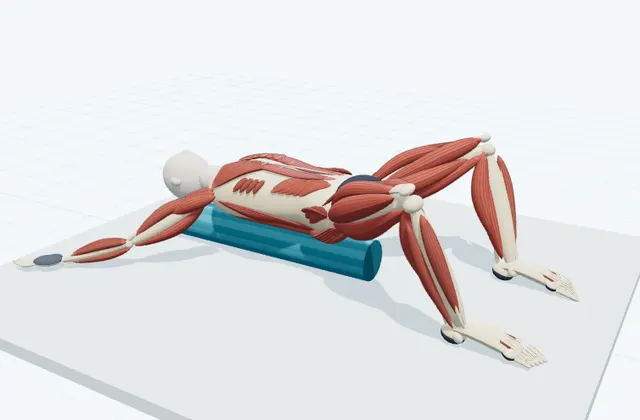
Position and focus
Supine (roller along the spine) · Opening the arms out to the side at the shoulders, and the front of the chest
Opening the arms out to the side at the shoulders, and the front of the chest
Starting position
Lie along the roller and bend your knees. Turn your palms up and place both hands on the floor beside your body.
Movement phases
1. Set up
Rest the backs of your hands on the floor, without shrugging your shoulders.
2. Raise the arms
Keeping the backs of your hands along the floor, move both arms in an arc towards your head.
3. Hold the position
Stop before any numbness appears in your shoulders or arms, and keep breathing.
4. Return the arms
Follow the same arc to bring your arms back to your sides.
What to check yourself
As the arms rise, are the shoulders shrugging? Is the lower back arching?
Coaching points for instructors
The point where the backs of the hands begin to lift off the floor is a guide to the range the client can move through without strain. Cue the client to stop there once the hands lift.
Caution
Do not press hard through pain. Stop if you feel sharp pain, numbness or dizziness. If you have osteoporosis, pain under treatment, have had surgery or are pregnant, check with your healthcare professional. If you feel numbness in your arms or hands, lower your arms immediately.
These English notes describe a prototype model. Stretch and foam roller lessons have not yet been reviewed by the supervising instructors. They are not medical advice or an individual exercise prescription.
This lesson was put together for this site. It has not yet been reviewed by an expert.
Related lessons
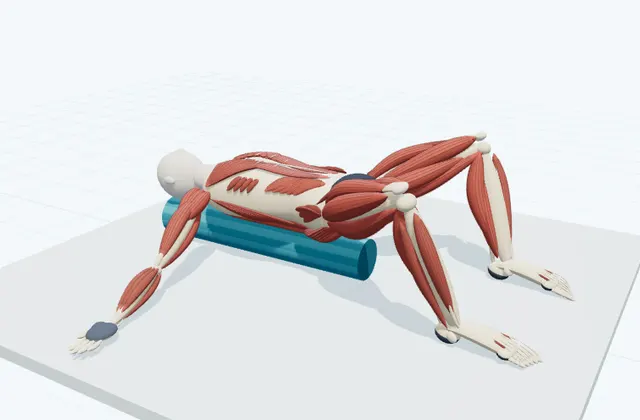
Chest Opening on the Roller
Foam roller exercise
Relaxing the front of the chest and around the shoulders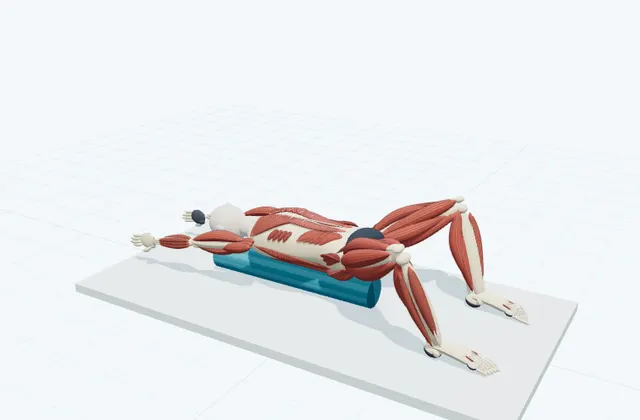
Arm Reach Overhead on the Roller
Foam roller exercise
Shoulder flexion and trunk stability without the ribs lifting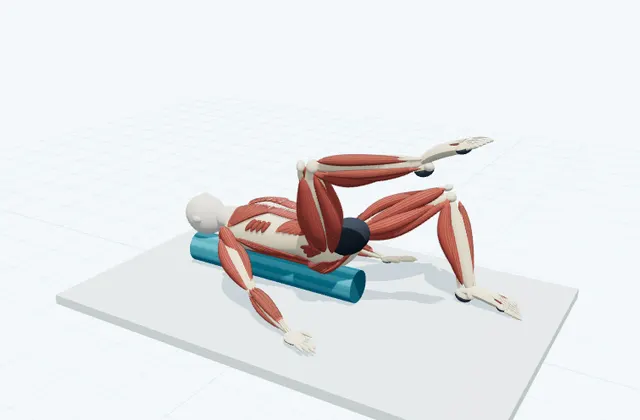
Knee Fold on the Roller
Foam roller exercise
Flexing the hip while keeping the pelvis stable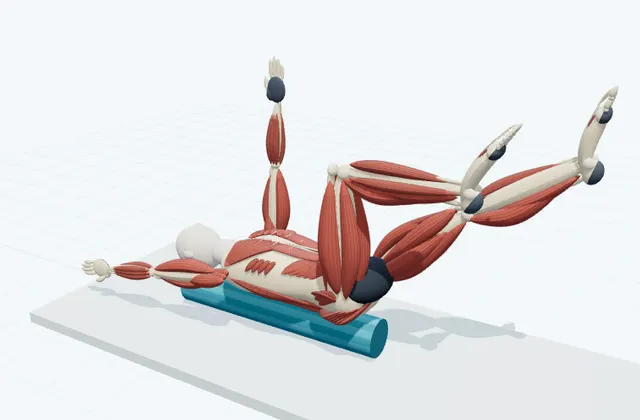
Dead Bug on the Roller
Foam roller exercise
Trunk stability and coordination of the arms and legs